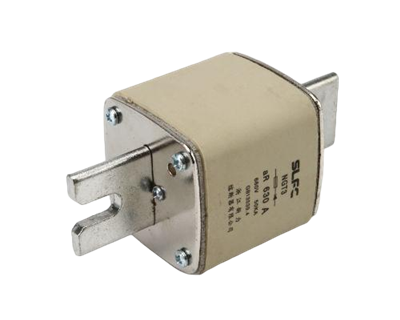
As a supplier of RT18 - 125 Fuses, I've witnessed firsthand the critical role these fuses play in electrical systems, especially when it comes to responding to short - circuit currents. In this blog, I'll delve into how the RT18 - 125 Fuse reacts to short - circuit events, exploring its design, mechanisms, and real - world applications.
Understanding Short - Circuit Currents
Before we discuss how the RT18 - 125 Fuse responds to short - circuit currents, it's essential to understand what short - circuit currents are. A short - circuit occurs when an unintended low - resistance connection is established between two points in an electrical circuit. This low - resistance path allows a large amount of current to flow, far exceeding the normal operating current of the circuit.
Short - circuit currents can be extremely dangerous. They can cause overheating, damage to electrical components, and even pose a fire hazard. That's where fuses like the RT18 - 125 come in. Their primary function is to protect the electrical system by interrupting the circuit when a short - circuit occurs.
Design Features of RT18 - 125 Fuse
The RT18 - 125 Fuse is designed with several features that enable it to effectively respond to short - circuit currents. First and foremost, it has a specific melting element. This element is carefully engineered to have a precise melting point. When a short - circuit occurs, the high current flowing through the fuse generates a large amount of heat. The melting element is designed to melt at a specific temperature, which is reached quickly due to the high current.
Another important design feature is the arc - quenching mechanism. When the melting element melts, an arc is formed between the separated parts of the element. This arc can continue to conduct current, which is undesirable as it can still cause damage to the circuit. The RT18 - 125 Fuse is equipped with an arc - quenching chamber. This chamber is filled with a special material that helps to extinguish the arc quickly. By quenching the arc, the fuse can effectively interrupt the circuit and prevent further damage.
Response to Short - Circuit Currents
When a short - circuit occurs in a circuit protected by an RT18 - 125 Fuse, the following sequence of events takes place:
1. High - Current Flow
As soon as the short - circuit is established, a large amount of current starts to flow through the fuse. This current is much higher than the rated current of the fuse. For example, if the RT18 - 125 Fuse is rated for 125A, a short - circuit might cause a current of several thousand amperes to flow through it.
2. Heating of the Melting Element
The high current flowing through the fuse causes the melting element to heat up rapidly. According to Joule's law, the heat generated in a conductor is proportional to the square of the current flowing through it and the resistance of the conductor. Since the current is extremely high during a short - circuit, the heat generated is also very large.
3. Melting of the Element
Once the temperature of the melting element reaches its melting point, it starts to melt. This process happens very quickly, usually within a fraction of a second. As the element melts, it breaks the electrical connection in the circuit.
4. Arc Formation and Quenching
When the melting element breaks, an arc is formed between the separated parts. The RT18 - 125 Fuse's arc - quenching chamber then comes into play. The special material in the chamber helps to cool the arc and reduce its conductivity. Eventually, the arc is extinguished, and the circuit is completely interrupted.
Real - World Applications
The ability of the RT18 - 125 Fuse to respond quickly to short - circuit currents makes it suitable for a wide range of applications. It is commonly used in industrial electrical systems, such as those found in manufacturing plants and factories. In these environments, short - circuits can cause significant damage to expensive equipment and disrupt production. The RT18 - 125 Fuse provides reliable protection against such events.
It is also used in commercial buildings, such as office complexes and shopping malls. Electrical systems in these buildings need to be protected to ensure the safety of the occupants and the proper functioning of the facilities. The RT18 - 125 Fuse helps to prevent electrical fires and equipment damage in these settings.
Complementary Products
If you are using an RT18 - 125 Fuse, you might also be interested in RT18 - 125 Fuse Holder. The fuse holder provides a secure and convenient way to install and replace the fuse. It is designed to ensure proper electrical contact and mechanical stability.
Another related product is the 22*58 Fuse. This fuse has similar characteristics to the RT18 - 125 Fuse and can be used in applications where a different size or rating is required.
Contact for Procurement
If you are in need of RT18 - 125 Fuses or any of our related products, we invite you to contact us for procurement. Our team of experts is ready to assist you with your requirements, answer any questions you may have, and provide you with a competitive quote. We pride ourselves on delivering high - quality products and excellent customer service. Whether you are a small business or a large industrial enterprise, we can meet your fuse needs.


References
- Electrical Engineering Handbook, edited by Richard C. Dorf
- Fuse Technology and Applications, by International Electrotechnical Commission (IEC) standards documents