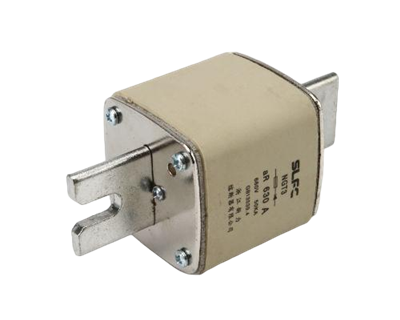
Figuring out the right TUV Solar Fuse rating for a solar array can seem like a real head - scratcher. But don't worry! As a TUV Solar Fuse supplier, I've got the lowdown on how to calculate it.
First off, let's understand why getting the correct fuse rating is so important. In a solar array, fuses act as the safety guards. They protect the system from over - current situations that can cause damage to components, start fires, or even lead to system failures. A fuse that's rated too high won't blow when it should, and a fuse rated too low will blow prematurely, disrupting the power generation of your solar setup.
Understanding the Basics of Solar Arrays
Before we dive into the calculations, we need to get a grip on the key components of a solar array. A solar array is made up of multiple solar panels connected in series and parallel. When panels are connected in series, the voltage adds up, while the current remains the same. On the other hand, when panels are connected in parallel, the current adds up, and the voltage stays constant.
The two main electrical values we're interested in for fuse rating calculations are the maximum current and the maximum voltage of the solar array. The maximum current is determined by the short - circuit current (Isc) of the solar panels, and the maximum voltage is determined by the open - circuit voltage (Voc) of the panels.
Calculating the Maximum Current of the Solar Array
To calculate the maximum current of the solar array, we start with the short - circuit current (Isc) of a single solar panel. The Isc is the current that flows through the panel when its terminals are short - circuited (i.e., there's no load connected).
Let's say we have a solar panel with an Isc of 8 amps. If we connect 5 of these panels in parallel, the total maximum current of the array will be the Isc of a single panel multiplied by the number of panels in parallel. So, in this case, the total maximum current would be 8 amps x 5 = 40 amps.
However, it's important to note that in real - world conditions, the current can be higher due to factors like temperature variations and shading. To account for these factors, we usually apply a safety factor. A common safety factor for solar arrays is 1.25. So, the adjusted maximum current for our example would be 40 amps x 1.25 = 50 amps.
Selecting the Fuse Rating Based on the Maximum Current
Once we've calculated the adjusted maximum current of the solar array, we can select the appropriate fuse rating. The fuse rating should be slightly higher than the adjusted maximum current to prevent it from blowing under normal operating conditions.
In our example, where the adjusted maximum current is 50 amps, we might choose a fuse with a rating of 60 amps. This gives us a bit of a buffer to account for any small fluctuations in the current.
Considering the Maximum Voltage of the Solar Array
The maximum voltage of the solar array is determined by the open - circuit voltage (Voc) of the solar panels. The Voc is the voltage across the panel when there's no current flowing (i.e., the panel is not connected to a load).
If we have a solar panel with a Voc of 40 volts and we connect 10 of these panels in series, the total maximum voltage of the array will be 40 volts x 10 = 400 volts. The fuse we select must be able to handle this maximum voltage. Most TUV - certified fuses come with a specified voltage rating, and we need to make sure that the voltage rating of the fuse is equal to or higher than the maximum voltage of the solar array.
Other Factors to Consider
There are a few other factors that can affect the selection of the TUV Solar Fuse rating. One of these is the type of connection in the solar array. For example, if the array has a combination of series and parallel connections, we need to calculate the current and voltage for each section separately and then select the appropriate fuse ratings accordingly.
Another factor is the ambient temperature. Higher ambient temperatures can cause the fuse to heat up more quickly, which can affect its performance. Some fuses are designed to handle higher temperatures, and we may need to choose a fuse with a higher temperature rating if the solar array is located in a hot climate.

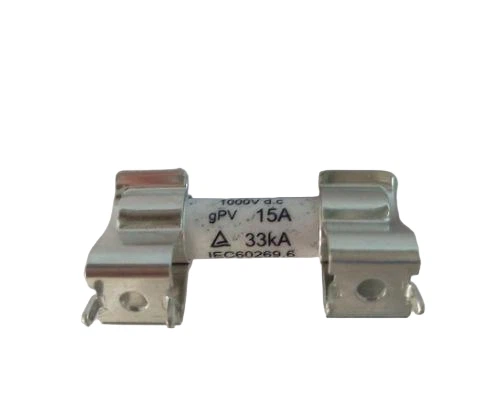
Types of TUV Solar Fuses
As a TUV Solar Fuse supplier, we offer a variety of fuses suitable for different solar applications. For example, the Solar Fuse Clip is a great option for making secure connections in the solar array. It's designed to hold the fuse in place and ensure good electrical contact.
The DC Fuse for Solar is specifically designed for use in DC circuits, which are common in solar arrays. These fuses are able to handle the high - voltage and high - current conditions typically found in solar systems.
The NH PV Fuse is another popular choice. It's a high - performance fuse that offers reliable protection for solar arrays. It has a high breaking capacity, which means it can safely interrupt the circuit in the event of a short - circuit.
Importance of TUV Certification
When selecting a solar fuse, it's crucial to choose one that is TUV - certified. TUV certification ensures that the fuse meets strict quality and safety standards. It means that the fuse has been tested under various conditions to ensure its performance and reliability.
Conclusion
Calculating the appropriate TUV Solar Fuse rating for a solar array involves a few key steps. First, we calculate the maximum current of the array, apply a safety factor, and then select a fuse rating that's slightly higher than the adjusted maximum current. We also need to consider the maximum voltage of the array and make sure the fuse can handle it.
There are many factors to take into account, such as the type of connection, ambient temperature, and the specific requirements of the solar system. By choosing the right fuse and ensuring it's TUV - certified, we can protect the solar array from over - current situations and ensure its long - term performance.
If you're in the market for high - quality TUV Solar Fuses, we're here to help. Whether you need a Solar Fuse Clip, a DC Fuse for Solar, or an NH PV Fuse, we've got you covered. Contact us to discuss your specific needs and start the procurement process.
References
- Solar Energy International. "Solar Electric System Design and Installation Handbook."
- National Electrical Code (NEC) for solar installations.
- TUV Rheinland standards for solar fuses.