


As a supplier of PV Fuse 1000V, I am often asked about the arc - quenching ability of these fuses. In the photovoltaic (PV) industry, the arc - quenching ability of a PV Fuse 1000V is a critical factor that directly impacts the safety and reliability of PV systems.
The Basics of Arc Formation in PV Systems
In a PV system, electrical arcs can form under various circumstances. When a fault occurs, such as a short - circuit, the current can increase rapidly. As the fuse blows to interrupt the excessive current, an arc is formed between the separated fuse elements. This arc is a high - temperature, ionized gas channel that can conduct electricity. If not quenched quickly, it can cause damage to the fuse, the surrounding components, and even pose a fire hazard.
The high - voltage environment of a 1000V PV system exacerbates the problem. The higher the voltage, the more energy is available to sustain the arc. Therefore, PV Fuse 1000V must have excellent arc - quenching capabilities to ensure the safe operation of the system.
Mechanisms of Arc Quenching in PV Fuse 1000V
1. Physical Structure
The physical structure of a PV Fuse 1000V plays a crucial role in arc quenching. Most PV fuses are designed with a special structure that helps to elongate and cool the arc. For example, the fuse element may be wound in a helical shape or have multiple sections. When the arc is formed, this structure forces the arc to travel a longer path, increasing its length. As the arc length increases, the resistance of the arc also increases, and the voltage drop across the arc becomes larger.
At the same time, the surrounding filler material in the fuse also contributes to arc quenching. The filler, usually made of materials like quartz sand, absorbs the heat from the arc. The high - heat capacity of the filler helps to cool the arc quickly, reducing the temperature of the ionized gas and promoting the de - ionization process. As the gas de - ionizes, its conductivity decreases, and the arc is eventually extinguished.
2. Chemical Reactions
In some PV fuses, there are also chemical reactions involved in the arc - quenching process. The filler material may contain substances that can react with the arc plasma. These reactions can absorb energy from the arc and change the chemical composition of the plasma, further reducing its conductivity. For example, certain metal oxides in the filler can react with the hot gases in the arc, forming stable compounds and removing free electrons from the plasma.
Importance of Arc - Quenching Ability in PV Systems
1. Safety
Safety is the primary concern in any PV installation. A fuse with poor arc - quenching ability can lead to a persistent arc, which may cause overheating and damage to the fuse holder and other components. In extreme cases, it can even start a fire, endangering the entire PV system and the surrounding environment. A PV Fuse 1000V with reliable arc - quenching ability can quickly interrupt the fault current and prevent these dangerous situations from occurring.
2. System Reliability
The reliability of a PV system depends on the proper functioning of all its components. A fuse that fails to quench the arc effectively may not be able to protect the system from subsequent faults. This can lead to repeated damage to the system and increased downtime for repairs. By ensuring that the PV Fuse 1000V has excellent arc - quenching capabilities, the overall reliability of the PV system can be significantly improved.
Our PV Fuse 1000V Products and Their Arc - Quenching Performance
Our company offers a wide range of PV Fuse 1000V products that are designed with advanced arc - quenching technologies. Our fuses are tested rigorously to meet the highest industry standards.
We use high - quality filler materials in our fuses to ensure efficient heat absorption and arc cooling. The physical structure of our fuse elements is optimized to maximize arc elongation. As a result, our PV Fuse 1000V can quench arcs quickly and reliably, even under high - fault - current conditions.

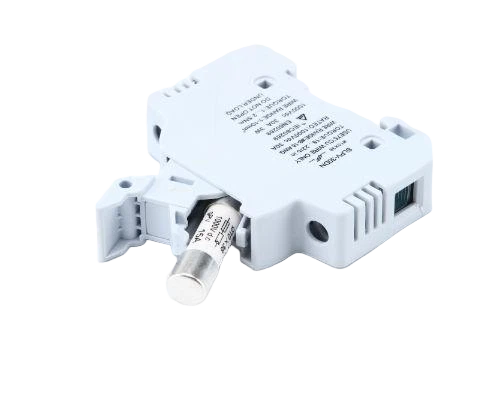
In addition to the standard PV Fuse 1000V, we also provide related products such as DC500V Solar Fuse Holder and DC1000V Solar PV Fuse Holder Base. These products are designed to work seamlessly with our fuses, providing a complete solution for PV system protection.
We also offer a variety of current ratings, such as 500VDC 1A 2A 3A 4A 5A 6A 8A 10A 12A 15A 20A 25A 30A Solar PV Fuse, to meet the different requirements of PV systems. Whether it is a small - scale residential PV system or a large - scale commercial installation, we have the right fuse products for you.
Conclusion
The arc - quenching ability of a PV Fuse 1000V is a vital characteristic that determines the safety and reliability of PV systems. Through advanced physical structures, chemical reactions, and high - quality materials, our PV Fuse 1000V products can effectively quench arcs and protect PV systems from faults.
If you are looking for high - quality PV Fuse 1000V products with excellent arc - quenching performance, we are here to serve you. We welcome you to contact us for procurement and further discussions. Our team of experts can provide you with detailed technical support and help you select the most suitable products for your PV projects.
References
- "Photovoltaic System Protection: Fuses and Circuit Breakers" - IEEE Transactions on Industry Applications
- "Arc - Quenching Phenomena in High - Voltage Fuses" - Journal of Electrical Engineering
- "Safety Standards for PV Systems and the Role of Fuses" - International Electrotechnical Commission (IEC) Publications


