


What is the cost of customizing a PV Fuse Base?
As a supplier of PV Fuse Bases, I often get asked about the cost of customizing these essential components for the solar energy industry. Customization can offer significant advantages, but it also comes with its own set of considerations and costs. In this blog, I'll delve into the various factors that influence the cost of customizing a PV Fuse Base and provide insights to help you make informed decisions.
Understanding the Basics of PV Fuse Bases
Before we discuss the cost of customization, let's briefly understand what a PV Fuse Base is. PV Fuse Bases are crucial components in photovoltaic (PV) systems. They are designed to hold fuses, which protect the electrical circuits in solar panels from overcurrent conditions. A reliable PV Fuse Base ensures the safety and efficient operation of the entire PV system. You can explore our standard PV Fuse Base options on our website.
Factors Affecting the Cost of Customization
Design Complexity
One of the primary factors influencing the cost of customizing a PV Fuse Base is the design complexity. A simple design with basic features will generally cost less to customize than a complex one. For example, if you require a unique shape, size, or mounting mechanism, it will involve more engineering work and potentially specialized manufacturing processes. This additional effort and resources will increase the overall cost.
Material Selection
The choice of materials also plays a significant role in determining the cost. Different materials have different properties and prices. High - quality, durable materials that can withstand harsh environmental conditions, such as extreme temperatures and UV radiation, are often more expensive. For instance, using a high - grade plastic or a corrosion - resistant metal for the PV Fuse Base will add to the cost compared to a more common material.
Quantity
The quantity of customized PV Fuse Bases you order is another important factor. Generally, the cost per unit decreases as the order quantity increases. This is because of economies of scale. When producing a large number of units, the fixed costs associated with tooling, setup, and design are spread over a larger number of products, resulting in a lower per - unit cost. On the other hand, if you need a small batch of customized PV Fuse Bases, the cost per unit will be relatively higher.
Testing and Certification
Customized PV Fuse Bases need to meet certain industry standards and certifications. Testing the product to ensure it meets these requirements can be a costly process. The testing may involve electrical performance tests, environmental tests, and safety tests. Additionally, obtaining the necessary certifications from recognized bodies adds to the overall cost. However, these tests and certifications are essential to ensure the quality and reliability of the PV Fuse Bases in real - world applications.
Cost Breakdown
Let's break down the cost components of customizing a PV Fuse Base:
Design and Engineering
The initial design and engineering phase is where the concept of the customized PV Fuse Base is developed. This includes creating detailed drawings, conducting feasibility studies, and prototyping. The cost of this phase can vary depending on the complexity of the design. It may involve the expertise of electrical engineers, mechanical engineers, and designers, and can range from a few hundred to several thousand dollars.
Tooling and Setup
Once the design is finalized, tooling and setup are required for the manufacturing process. Tooling includes creating molds, dies, and fixtures specific to the customized PV Fuse Base. The cost of tooling can be significant, especially for complex designs. Setup costs involve preparing the manufacturing equipment and processes for production. These costs are typically one - time expenses but can have a significant impact on the overall cost, especially for small - quantity orders.
Manufacturing
The manufacturing cost includes the cost of materials, labor, and overheads. As mentioned earlier, the choice of materials affects the cost. Labor costs depend on the manufacturing process and the level of automation. Overheads include costs such as factory rent, utilities, and equipment maintenance. The manufacturing cost per unit can vary widely depending on the factors mentioned above.
Testing and Certification
Testing and certification costs are incurred to ensure that the customized PV Fuse Base meets the required standards. This may involve sending samples to independent testing laboratories and paying for the certification fees. The cost of testing and certification can range from a few hundred to several thousand dollars, depending on the type and number of tests required.
Examples of Customization Costs
To give you a better idea of the cost of customization, let's consider a few examples:
Simple Customization
Suppose you need a PV Fuse Base with a slightly different mounting hole pattern. This is a relatively simple customization. The design and engineering cost may be around $500 - $1000. The tooling and setup cost may be around $1000 - $2000. If you order 1000 units, the manufacturing cost per unit may be around $5 - $8, and the testing and certification cost may be around $1000. So, the total cost for this simple customization would be approximately $8000 - $11000, with a per - unit cost of around $8 - $11.
Complex Customization
If you require a PV Fuse Base with a completely unique shape, a special material, and advanced electrical features, the cost will be much higher. The design and engineering cost could be $5000 - $10000. The tooling and setup cost may be $5000 - $10000. For an order of 500 units, the manufacturing cost per unit may be around $15 - $20, and the testing and certification cost may be around $3000 - $5000. The total cost for this complex customization would be approximately $15000 - $25000, with a per - unit cost of around $30 - $50.
Comparing Customization with Standard Products
It's important to compare the cost of customization with the cost of standard PV Fuse Bases. Standard products are generally more cost - effective because they are mass - produced, and the tooling and design costs are already amortized. However, if your application requires specific features or dimensions that are not available in standard products, customization may be the only option. In such cases, the additional cost of customization may be justified by the improved performance and compatibility of the PV Fuse Base with your PV system.
Our Offerings
We offer a range of standard SLPV - 32L 10x85 1500Vdc 20A Solar Fuse and 1500 Vdc 10x85mm Solar PV Fuse Holder options. If you have specific requirements for a customized PV Fuse Base, our team of experts can work with you to understand your needs and provide a detailed cost estimate. We have the experience and expertise to handle both simple and complex customization projects, ensuring that you get a high - quality product that meets your exact specifications.
Conclusion
Customizing a PV Fuse Base can offer many benefits, such as better performance, compatibility, and safety for your PV system. However, it's important to understand the various factors that influence the cost of customization. By considering design complexity, material selection, quantity, testing, and certification, you can make an informed decision about whether customization is the right choice for you.

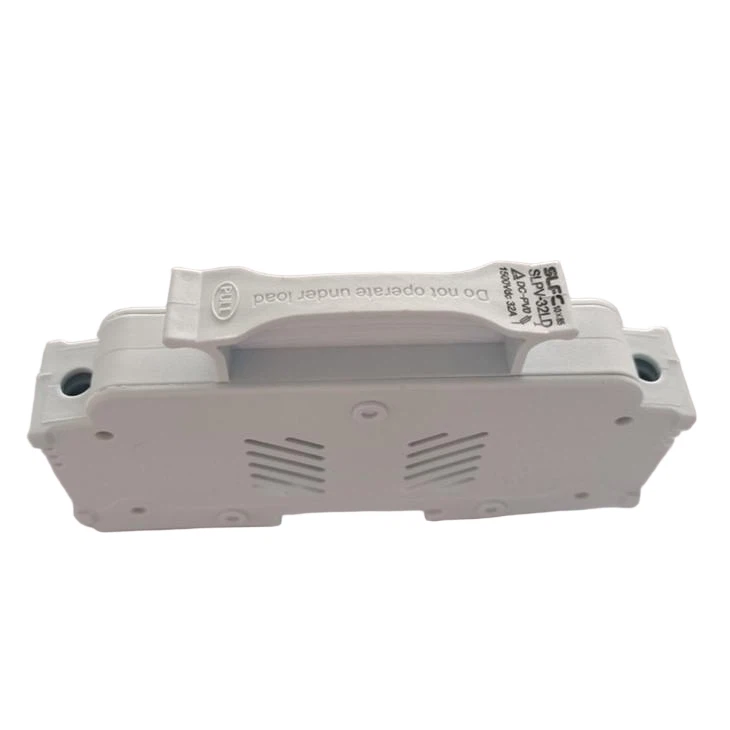
If you are interested in customizing a PV Fuse Base or have any questions about our products, please feel free to contact us. Our team is ready to assist you with your procurement needs and discuss the best solutions for your PV system.
References
- "Photovoltaic Systems Design and Installation Handbook"
- Industry standards and guidelines for PV Fuse Bases


