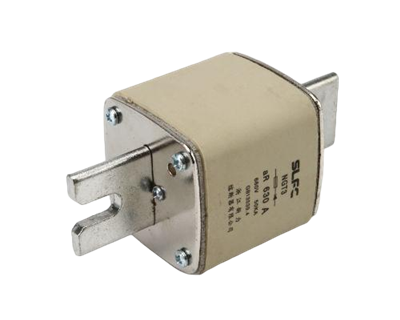
What is the impulse withstand capacity of a solar fuse link?
As a leading supplier of solar fuse links, I've encountered numerous inquiries regarding the impulse withstand capacity of these critical components. In the solar power industry, the reliability and safety of electrical systems are paramount, and solar fuse links play a pivotal role in protecting these systems from overcurrents and short - circuits. Understanding the impulse withstand capacity is essential for ensuring the proper functioning and longevity of solar installations.
The Concept of Impulse Withstand Capacity
The impulse withstand capacity of a solar fuse link refers to its ability to withstand high - magnitude, short - duration current surges, known as impulse currents, without experiencing damage or premature operation. These impulse currents can occur due to various factors, such as lightning strikes, switching operations, or faults in the electrical system.
Lightning strikes are one of the most significant sources of impulse currents in solar power systems. When a lightning bolt hits a solar panel or the surrounding area, it can induce a large current surge that propagates through the electrical network. A solar fuse link with a high impulse withstand capacity can absorb and dissipate this energy, preventing damage to other components in the system, such as inverters, charge controllers, and batteries.
Switching operations, such as the connection or disconnection of solar panels or the activation of protective devices, can also generate impulse currents. These transient currents can be relatively high in magnitude and short in duration. A well - designed solar fuse link should be able to handle these switching impulses without blowing, ensuring the continuous operation of the solar power system.
Factors Affecting Impulse Withstand Capacity
Several factors influence the impulse withstand capacity of a solar fuse link. One of the primary factors is the physical construction of the fuse link. The material used for the fuse element, its cross - sectional area, and its length all play a crucial role in determining how well the fuse can withstand impulse currents.
Fuse elements made of materials with high conductivity and good thermal properties, such as silver or copper, are often preferred for solar fuse links. These materials can handle high - current surges more effectively by dissipating the heat generated during the impulse event. The cross - sectional area of the fuse element is also important. A larger cross - sectional area allows for a greater current - carrying capacity and can better withstand impulse currents.
The length of the fuse element affects its resistance and the way it responds to impulse currents. A longer fuse element may have a higher resistance, which can cause it to heat up more quickly during an impulse event. However, a longer element can also provide more surface area for heat dissipation, which can be beneficial in withstanding high - energy impulses.
Another factor that affects the impulse withstand capacity is the design of the fuse link's housing. The housing should be able to protect the fuse element from external factors, such as moisture, dust, and mechanical damage. It should also provide proper insulation to prevent arcing and short - circuits during impulse events.
Testing and Rating of Impulse Withstand Capacity
To ensure the reliability of solar fuse links, manufacturers conduct various tests to determine their impulse withstand capacity. One of the most common tests is the impulse current test, which involves subjecting the fuse link to a high - magnitude, short - duration current pulse.
During the impulse current test, the fuse link is connected to a test circuit, and a specific impulse current waveform is applied. The magnitude and duration of the impulse current are carefully controlled to simulate real - world conditions, such as lightning strikes or switching operations. The fuse link is then monitored to see if it can withstand the impulse without blowing or suffering any significant damage.
Based on the results of these tests, manufacturers assign an impulse withstand rating to the solar fuse link. This rating indicates the maximum impulse current that the fuse link can withstand without operating. For example, a solar fuse link with an impulse withstand rating of 10 kA can handle a short - duration current surge of up to 10,000 amperes without blowing.
Importance of Impulse Withstand Capacity in Solar Applications
In solar power systems, the impulse withstand capacity of a fuse link is of utmost importance. Solar installations are often located in outdoor environments, where they are exposed to various weather conditions, including lightning storms. A solar fuse link with a low impulse withstand capacity may blow prematurely during a lightning strike, leading to system downtime and potential damage to other components.
Moreover, as solar power systems become more complex and interconnected, the risk of impulse currents from switching operations also increases. A reliable solar fuse link with a high impulse withstand capacity can ensure the safe and continuous operation of the system, even in the face of these transient events.

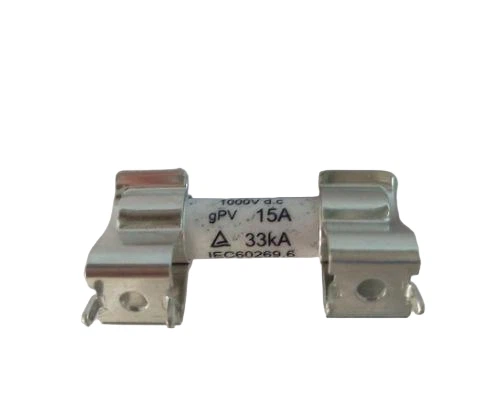
Our Product Offerings
As a supplier of solar fuse links, we offer a wide range of products with different impulse withstand capacities to meet the diverse needs of our customers. Our NH PV Fuse is designed to provide high - performance protection against overcurrents and impulse currents. It features a robust construction and a high - quality fuse element, which ensures excellent impulse withstand capacity.
In addition to our NH PV fuses, we also offer PV Fuse Holder and Solar Fuse Clip products. These accessories are designed to work seamlessly with our solar fuse links, providing a complete solution for solar power system protection.
Conclusion
The impulse withstand capacity of a solar fuse link is a critical parameter that determines its ability to protect solar power systems from high - magnitude, short - duration current surges. By understanding the concept of impulse withstand capacity, the factors that affect it, and the importance of proper testing and rating, customers can make informed decisions when selecting solar fuse links for their applications.
If you are in the market for high - quality solar fuse links with excellent impulse withstand capacity, we invite you to contact us for more information. Our team of experts is ready to assist you in choosing the right products for your solar power system. Whether you are a solar installer, a system integrator, or an end - user, we can provide you with the best solutions to ensure the safety and reliability of your solar installation.
References
- IEC 60269 - 6: Low - voltage fuses - Part 6: Supplementary requirements for fuses for solar photovoltaic energy systems.
- UL 2579: Standard for Safety for Fuses for Use in Photovoltaic Power Systems.
- IEEE Std 1413 - 2010: IEEE Guide for Protection of Photovoltaic Power Systems.