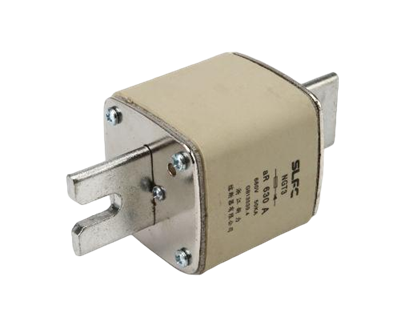
Hey there! As a supplier of RS3 Fuses, I've gotten tons of questions about what's going on inside these little guys. So, I thought I'd take a deep dive and break down the internal structure of RS3 Fuses for you.
Let's start with the basics. An RS3 Fuse is a type of high - rupturing capacity (HRC) fuse. These fuses are designed to protect electrical circuits from overcurrent situations, like short - circuits. They're super important in all sorts of electrical systems, from industrial machinery to household appliances.
The Core Components
1. Fuse Element
The heart of the RS3 Fuse is the fuse element. This is a thin strip or wire made of a material with a low melting point. Usually, it's something like silver or a silver - alloy. Why silver? Well, silver is a great conductor of electricity, and it has predictable melting characteristics. When an overcurrent passes through the fuse, the heat generated by the electrical resistance of the element causes it to melt. This breaks the circuit and stops the flow of electricity, protecting the rest of the system from damage.


The shape and size of the fuse element are carefully designed. They're engineered to handle a specific amount of current under normal operating conditions. If the current exceeds this rated value, the element will heat up and eventually melt.
2. Fuse Body
The fuse element is housed inside the fuse body. The body is typically made of a ceramic or glass material. These materials are great insulators, which means they don't conduct electricity. They also have high heat - resistance, so they can withstand the heat generated when the fuse element melts.
The fuse body serves a few important functions. First, it protects the fuse element from physical damage. Second, it contains the arc that forms when the fuse element melts. When the element melts, an electrical arc is created. This arc can be extremely hot and dangerous. The fuse body is designed to extinguish this arc quickly, preventing further damage to the circuit.
3. End Caps
At each end of the fuse body, there are end caps. These are usually made of metal, like brass. The end caps serve as the connection points for the fuse in the electrical circuit. They provide a secure and reliable way to attach the fuse to the circuit, ensuring good electrical contact.
The end caps are also important for heat dissipation. When current flows through the fuse, some heat is generated. The end caps help to transfer this heat away from the fuse element and into the surrounding environment.
How RS3 Fuses Compare to Other Fuses
If you're familiar with fuses, you might be wondering how RS3 Fuses compare to other types, like the RS0 Fuse. The RS0 Fuse is another type of HRC fuse, but it has some differences in its internal structure and performance.
The RS0 Fuse generally has a different design for its fuse element. It might be optimized for different current ratings or applications. While both RS0 and RS3 Fuses are used for overcurrent protection, the specific requirements of a circuit will determine which one is the best fit.
Then there's the RS3 Fast Fuse. As the name suggests, this is a faster - acting version of the RS3 Fuse. The internal structure of the RS3 Fast Fuse is similar to the standard RS3 Fuse, but the fuse element is designed to melt more quickly in response to an overcurrent. This makes it ideal for applications where a very fast response time is required, like in sensitive electronic circuits.
Another type is the Bolted Fast Fuse. This fuse is designed to be bolted into place in the circuit. The internal structure is also based on the same principles as the RS3 Fuse, but it has a different mounting mechanism. It's often used in applications where a more secure and permanent connection is needed, like in industrial power distribution systems.
Why Choose Our RS3 Fuses
As a supplier, we take pride in offering high - quality RS3 Fuses. Our fuses are manufactured to strict standards, ensuring reliable performance. We use the best materials for the fuse element, body, and end caps, so you can trust that our fuses will work when you need them most.
We also offer a wide range of current ratings to suit different applications. Whether you're working on a small electronic project or a large industrial system, we have the right RS3 Fuse for you.
If you're in the market for RS3 Fuses or have any questions about their internal structure or applications, don't hesitate to reach out. We're here to help you find the perfect fuse for your needs. Our team of experts can provide you with all the information you need to make an informed decision.
In conclusion, understanding the internal structure of RS3 Fuses is crucial for anyone working with electrical circuits. Knowing how these fuses work and what they're made of can help you choose the right fuse for your application and ensure the safety and reliability of your electrical systems. So, if you're looking for top - quality RS3 Fuses, give us a shout. We're ready to start a conversation about your procurement needs.
References
- Electrical Engineering Handbook, Third Edition
- Fuse Technology and Applications, published by a leading electrical engineering institute