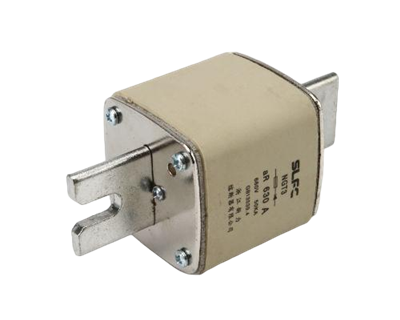
In the realm of electrical systems, especially those operating under high - voltage direct current (DC) conditions, fuses play a critical and irreplaceable role. As a dedicated supplier of 1000VDC fuses, I often encounter inquiries about the response time of these fuses. Understanding the response time is crucial for ensuring the safety and efficiency of electrical circuits, and in this blog, I will delve into this topic in detail.
The Concept of Response Time in Fuses
The response time of a fuse refers to the time it takes for the fuse to open the circuit after an over - current event occurs. This characteristic is vital because in a high - voltage DC system like those using 1000VDC, a rapid response can prevent significant damage to equipment and safeguard personnel. When an over - current situation happens, such as a short - circuit or an overload, the fuse must quickly interrupt the current flow to avoid overheating, fires, or other catastrophic failures.
There are generally two types of response times: fast - acting and slow - acting. Fast - acting fuses are designed to blow quickly when an over - current occurs. They are suitable for circuits where sensitive components are present, as a rapid interruption can protect these components from damage. On the other hand, slow - acting fuses, also known as time - delay fuses, can tolerate short - term over - currents without blowing. They are often used in circuits with motors or other devices that experience high inrush currents during startup.
Factors Affecting the Response Time of 1000VDC Fuses
Current Magnitude
The magnitude of the over - current is one of the most significant factors influencing the response time of a 1000VDC fuse. According to the fundamental principles of fuse operation, the higher the over - current, the shorter the response time. When the current exceeds the rated current of the fuse by a large margin, the heat generated in the fuse element increases rapidly. This heat causes the fuse element to melt and break the circuit. For example, if a 1000VDC fuse is rated for 10A and the over - current reaches 50A, the response time will be much shorter compared to a situation where the over - current is only 15A.
Fuse Element Material
The material of the fuse element also has a profound impact on the response time. Different materials have different melting points and thermal conductivities. For instance, silver is a commonly used material for fuse elements due to its high electrical conductivity and relatively low melting point. Fuses with silver elements can respond quickly to over - currents because they heat up rapidly. In contrast, some fuses may use materials with higher melting points, which can result in a slower response time. These materials are often used in slow - acting fuses.
Ambient Temperature
The ambient temperature around the fuse can affect its response time. In a high - temperature environment, the fuse element is already at a relatively high temperature. When an over - current occurs, the additional heat generated can cause the fuse to blow more quickly. Conversely, in a cold environment, the fuse may take longer to reach the melting point of the element. This is because the heat dissipation is more efficient in a cold environment, and it takes more time for the heat generated by the over - current to accumulate and cause the element to melt.
Measuring the Response Time of 1000VDC Fuses
Measuring the response time of 1000VDC fuses requires specialized equipment and strict testing procedures. One common method is to use a high - speed data acquisition system. This system can record the current and voltage waveforms during an over - current event. By analyzing these waveforms, we can determine the exact moment when the fuse starts to melt and the time it takes to completely interrupt the circuit.


Another approach is to use a test circuit that simulates real - world conditions. In this test circuit, a known over - current is applied to the fuse, and the time from the start of the over - current to the interruption of the circuit is measured. This method allows us to evaluate the performance of the fuse under different over - current levels and ambient conditions.
Importance of Response Time in 1000VDC Applications
In 1000VDC applications, such as solar power systems and electric vehicle charging stations, the response time of fuses is of utmost importance. In solar power systems, PV Fuse Holder is often used in conjunction with 1000VDC Fuse. A fast - acting fuse can protect the solar panels and other components from damage caused by short - circuits or over - currents. If the fuse does not respond quickly enough, the high - voltage DC current can cause irreversible damage to the expensive solar panels and inverters.
In electric vehicle charging stations, the use of NH PV Fuse is common. These fuses need to respond rapidly to over - currents to ensure the safety of the charging process. A slow - acting fuse in this application could lead to overheating of the charging equipment, which may pose a fire hazard or damage the vehicle's battery.
Our 1000VDC Fuses and Their Response Time Characteristics
As a supplier of 1000VDC fuses, we have invested a great deal of effort in research and development to optimize the response time of our products. Our fast - acting 1000VDC fuses are designed to respond within milliseconds when an over - current occurs. We use high - quality silver - based fuse elements and advanced manufacturing processes to ensure rapid heat generation and melting.
Our slow - acting fuses, on the other hand, are carefully engineered to tolerate short - term over - currents without blowing. They are suitable for applications where high inrush currents are expected, such as in some industrial motor circuits. We conduct extensive testing on all our fuses to ensure that they meet or exceed industry standards for response time.
Conclusion and Call to Action
In conclusion, the response time of a 1000VDC fuse is a critical parameter that can significantly impact the safety and performance of electrical systems. Understanding the factors that affect the response time, such as current magnitude, fuse element material, and ambient temperature, is essential for selecting the right fuse for your application.
As a professional 1000VDC fuse supplier, we are committed to providing high - quality fuses with reliable response times. Whether you need fast - acting or slow - acting fuses, we have the products to meet your requirements. If you are interested in our 1000VDC Fuse products or have any questions about fuse response time, please feel free to contact us for procurement and further discussions. We look forward to serving you and helping you find the best fuse solutions for your electrical systems.
References
- IEEE Standard for Fuses for Use in Low - Voltage AC Power Circuits (IEEE C37.41 - 2019).
- IEC 60269 - 1:2018, Low - voltage fuses - Part 1: General requirements.
- "Fuse Technology Handbook" by Eaton Corporation.