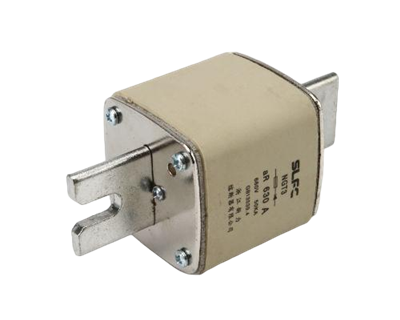
Hey there! As a GPV Fuse supplier, I often get asked whether GPV fuses can be used in high - voltage applications. Well, let's dive right into it and figure this out together.
First off, what are GPV fuses? GPV fuses are specifically designed for solar photovoltaic (PV) systems. They play a crucial role in protecting the electrical components in these systems from over - current situations. But when it comes to high - voltage applications, things get a bit more complicated.
High - voltage applications typically involve voltages that are much higher than the standard household or low - voltage industrial settings. In general, high - voltage can be considered anything above 1000 volts. And this is where the question of using GPV fuses becomes important.

One of the key factors to consider is the voltage rating of the GPV fuse. Most GPV fuses on the market, like the 1000VDC GPV Fuse, are rated for 1000V DC. This means they are designed to operate safely at a maximum voltage of 1000 volts direct current. If you try to use a GPV fuse in an application where the voltage exceeds its rating, it can lead to some serious problems.
When a fuse is subjected to a voltage higher than its rating, there's a risk of arcing. Arcing occurs when the electrical current jumps across the gap created when the fuse blows. In high - voltage situations, this arc can be extremely dangerous. It can cause damage to the surrounding components, start fires, and even pose a risk to human safety. So, if you're dealing with a voltage significantly higher than 1000V DC, using a standard 1000V rated GPV fuse is a big no - no.
However, that doesn't mean GPV fuses have no place in high - voltage applications at all. In some cases, if the high - voltage system has proper voltage - stepping mechanisms or is designed in a way that the actual voltage across the fuse remains within its rated limit, GPV fuses can be used. For example, if there are transformers or voltage regulators in the circuit that reduce the voltage to a safe level for the fuse, then it might work.
Another aspect to consider is the interrupting rating of the GPV fuse. The interrupting rating is the maximum current that a fuse can safely interrupt without causing any damage or creating an unsafe situation. In high - voltage applications, the fault currents can be quite large. If the interrupting rating of the GPV fuse is not sufficient for the potential fault currents in the high - voltage system, it can fail catastrophically.
Now, let's talk about the fuse holders. Along with the fuses themselves, the fuse holders also play an important role in high - voltage applications. We offer DC1000V TUV RoHS GPV Fuse Holder Base and DC1000V Solar PV Fuse Holder Base. These fuse holders are designed to work with 1000V DC GPV fuses. They are made with materials that can withstand the electrical stresses associated with this voltage level. But again, in high - voltage applications beyond 1000V, the suitability of these fuse holders needs to be carefully evaluated.
The insulation properties of the fuse holders are crucial. In high - voltage situations, the insulation needs to be able to prevent electrical leakage and withstand the high electric fields. If the insulation of the fuse holder breaks down, it can lead to short - circuits and other safety hazards.

In solar PV systems, which are a common application for GPV fuses, the trend is towards higher - voltage systems. As the industry tries to increase the efficiency and reduce the cost of power transmission, higher - voltage PV arrays are being developed. This means that the demand for fuses and fuse holders that can handle these higher voltages is also increasing.
Some manufacturers are starting to develop GPV fuses with higher voltage ratings to meet this demand. These fuses are designed with improved insulation materials and better arc - quenching mechanisms to handle the higher voltages. But as of now, they are not as widely available as the standard 1000V rated GPV fuses.
If you're thinking about using GPV fuses in a high - voltage application, here are some steps you should take. First, carefully assess the voltage and current requirements of your system. Determine the maximum voltage and fault current that the fuse might be subjected to. Then, check the voltage and interrupting ratings of the GPV fuses and fuse holders you're considering. If the ratings don't match, it's best to look for alternative solutions.

You can also consult with an electrical engineer or a professional in the field. They can help you analyze your system and recommend the most suitable fuses and fuse holders. Remember, safety should always be your top priority when dealing with high - voltage applications.
In conclusion, while standard 1000V rated GPV fuses are not typically suitable for high - voltage applications where the voltage exceeds their rating, there are some scenarios where they might work if the system is properly designed. And with the development of higher - voltage rated GPV fuses, the possibilities for using them in high - voltage applications are increasing.

If you're interested in learning more about our GPV fuses and fuse holders or have any questions about their use in high - voltage applications, don't hesitate to get in touch with us. We're here to help you find the right solutions for your electrical protection needs. Whether you're a small - scale solar installer or a large - scale energy project developer, we can work with you to ensure your systems are safe and reliable. So, reach out and let's start the conversation about your specific requirements.
References:
- Electrical Safety Standards and Guidelines for High - Voltage Systems
- Solar Photovoltaic System Design and Installation Manuals
- Technical Datasheets of GPV Fuses and Fuse Holders