


Can NGT Fuse be used in high - voltage circuits?
As a supplier of NGT fuses, I often encounter inquiries from customers regarding the suitability of NGT fuses for high - voltage circuits. This is a crucial question, as the correct use of fuses is essential for the safety and proper functioning of electrical systems. In this blog, I will delve into the characteristics of NGT fuses and analyze whether they can be used in high - voltage circuits.
Understanding NGT Fuses
NGT fuses are a type of low - voltage fuse that is widely used in various electrical applications. They are designed to protect electrical equipment from overcurrent conditions by melting and breaking the circuit when the current exceeds a certain value. NGT fuses are known for their high breaking capacity, which means they can safely interrupt high short - circuit currents without causing excessive arcing or damage to the surrounding equipment.
The construction of NGT fuses typically consists of a fuse element made of a metal alloy, which is enclosed in a ceramic or glass tube. The fuse element is designed to have a specific resistance, and when the current flowing through it exceeds the rated value, the heat generated by the current causes the fuse element to melt, thus interrupting the circuit.
High - Voltage Circuits: Requirements and Challenges
High - voltage circuits are those that operate at voltages above a certain threshold, usually considered to be 1000 volts or higher. These circuits are commonly found in power transmission and distribution systems, industrial plants, and some large - scale electrical equipment.
One of the main requirements for fuses in high - voltage circuits is the ability to withstand high voltages without breaking down. High - voltage fuses need to have a high dielectric strength to prevent arcing between the terminals of the fuse when the circuit is interrupted. Additionally, they must be able to interrupt high short - circuit currents safely and quickly to protect the electrical equipment from damage.
Another challenge in high - voltage circuits is the issue of current chopping. Current chopping occurs when the fuse interrupts the current before the natural zero - crossing of the alternating current waveform. This can lead to the generation of high - frequency transient voltages, which can damage the electrical equipment. High - voltage fuses need to be designed to minimize current chopping and ensure a smooth interruption of the circuit.

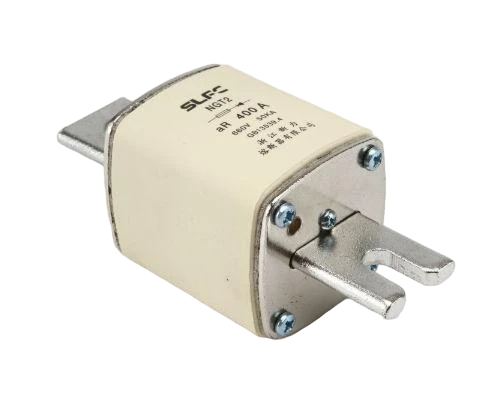
Can NGT Fuses be Used in High - Voltage Circuits?
In general, NGT fuses are not suitable for use in high - voltage circuits. The main reason is that NGT fuses are designed for low - voltage applications, and they do not have the necessary dielectric strength to withstand high voltages. When used in high - voltage circuits, there is a high risk of the fuse breaking down, which can lead to arcing and damage to the electrical equipment.
The rated voltage of NGT fuses is typically in the range of 230 - 690 volts. This means that they are designed to operate safely at these voltage levels and may not be able to handle the higher voltages found in high - voltage circuits. For example, if an NGT fuse is used in a 10,000 - volt circuit, the voltage across the fuse may cause the insulation to break down, resulting in a short - circuit and potentially causing a fire or other safety hazards.
However, there are some specific situations where NGT fuses may be used in circuits with relatively higher voltages, but only under certain conditions. For instance, if the circuit has a very low short - circuit current and the voltage stress on the fuse is within its rated capacity, an NGT fuse may be used. But this is a very rare case and requires careful consideration and calculation of the electrical parameters of the circuit.
Alternatives for High - Voltage Circuits
For high - voltage circuits, there are several types of fuses that are specifically designed to meet the requirements of these applications. Some common types of high - voltage fuses include:
-
NGT2 Fuse: The NGT2 Fuse is an advanced type of fuse that offers improved performance compared to traditional NGT fuses. Although it is still mainly for relatively low - to medium - voltage applications, it may have some enhanced features that make it more suitable for certain higher - voltage scenarios within its rated limits.
-
RS6 - 00 Fuse: The RS6 - 00 Fuse is designed for high - voltage applications. It has a high dielectric strength and can withstand high short - circuit currents. These fuses are commonly used in power distribution systems and industrial plants.
-
Bolted Fuse: The Bolted Fuse is another option for high - voltage circuits. It is designed to be bolted onto the circuit, providing a secure connection and good electrical contact. Bolted fuses are often used in high - voltage switchgear and transformers.
Conclusion
In conclusion, while NGT fuses are reliable and widely used in low - voltage applications, they are not suitable for high - voltage circuits due to their limited dielectric strength and rated voltage. For high - voltage circuits, it is essential to use fuses that are specifically designed for these applications, such as the NGT2 Fuse, RS6 - 00 Fuse, or Bolted Fuse.
If you are unsure about which type of fuse is suitable for your electrical circuit, our team of experts is here to help. We have extensive experience in providing fuse solutions for various applications, and we can assist you in selecting the right fuse based on your specific requirements. Whether you are dealing with low - voltage or high - voltage circuits, we can offer you high - quality fuses and professional advice. Contact us today to start a discussion about your fuse procurement needs and let us help you find the best solution for your electrical system.
References
- Electric Power Systems by Allen J. Wood and Bruce F. Wollenberg
- Fuses and Fuse Technology Handbook by R. M. Tallarida


