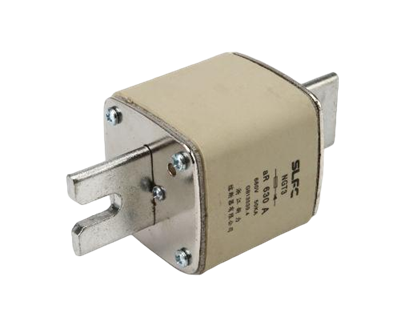
As a provider of NT Fuses, I've been frequently asked whether these fuses can be used in aerospace applications. This question stems from the unique and demanding nature of the aerospace industry, where safety, reliability, and performance are of utmost importance. In this blog, I'll delve into the technical aspects, advantages, challenges, and real - world considerations regarding the use of NT Fuses in aerospace applications.
Technical Features of NT Fuses
NT Fuses are known for their high - breaking capacity and fast - acting characteristics. They are designed to interrupt short - circuit currents quickly, protecting electrical systems from damage. These fuses are typically made with a ceramic body, which provides excellent thermal and mechanical stability. The fuse element inside is carefully calibrated to melt at a specific current level, thus breaking the circuit.
The RS 33 Fuse RS 33 Fuse is a type of NT Fuse that offers precise over - current protection. It has a well - defined time - current characteristic curve, which means it can respond predictably to different levels of over - current. This predictability is crucial in aerospace applications, where the electrical systems are complex and sensitive.
The NH4 Fuse NH4 Fuse is another variant of NT Fuses. It has a higher breaking capacity compared to some other fuses, making it suitable for applications where large short - circuit currents may occur. In aerospace, electrical systems may experience sudden surges due to various factors such as lightning strikes or equipment malfunctions, and a fuse with a high breaking capacity can prevent catastrophic damage.
The NH00C Fuse NH00C Fuse is designed for more delicate electrical circuits. It has a relatively lower rated current but still provides reliable over - current protection. In aerospace, there are many low - power circuits that require protection, and the NH00C Fuse can be an ideal choice for such applications.
Advantages of Using NT Fuses in Aerospace
High Reliability
Aerospace applications demand the highest level of reliability. NT Fuses are manufactured with strict quality control measures. The ceramic body of NT Fuses is resistant to high temperatures, vibrations, and mechanical shocks, which are common in aerospace environments. For example, during take - off, landing, and flight, an aircraft is subject to significant vibrations and mechanical stresses. NT Fuses can withstand these conditions without losing their protective function.
Fast - Acting Protection
In aerospace electrical systems, a short - circuit can lead to rapid overheating and potential fire hazards. NT Fuses are fast - acting, which means they can interrupt the circuit in a very short time when an over - current occurs. This fast response can prevent damage to expensive electrical components and ensure the safety of the entire aircraft.
Compact Size
Space is at a premium in aerospace applications. NT Fuses are relatively compact compared to some other types of fuses. Their small size allows for more efficient use of space in the aircraft's electrical panels and equipment bays. This is especially important in modern aircraft, where there is a trend towards more electrical systems and less available space.
Challenges of Using NT Fuses in Aerospace
Environmental Adaptability
Although NT Fuses are designed to be robust, the aerospace environment is extremely harsh. The temperature range in aerospace can vary from extremely cold at high altitudes to very hot near engine compartments. NT Fuses need to maintain their performance across this wide temperature range. Additionally, the low - pressure environment at high altitudes can affect the arc - quenching process of fuses. Special design considerations may be required to ensure that NT Fuses work effectively in such conditions.


Certification Requirements
The aerospace industry has strict certification requirements. NT Fuses need to meet various international and national standards, such as those set by the Federal Aviation Administration (FAA) in the United States and the European Union Aviation Safety Agency (EASA). Obtaining these certifications can be a time - consuming and costly process. It requires extensive testing and documentation to prove that the fuses meet all the safety and performance criteria.
Real - World Considerations
Compatibility with Existing Systems
When considering using NT Fuses in aerospace applications, it is essential to ensure compatibility with existing electrical systems. The electrical characteristics of NT Fuses, such as their rated current and voltage, need to match the requirements of the aircraft's electrical circuits. Retrofitting NT Fuses into existing aircraft may require some modifications to the electrical panels and wiring.
Cost - Benefit Analysis
The cost of using NT Fuses in aerospace applications needs to be carefully evaluated. While NT Fuses offer many advantages, they may be more expensive than some other types of fuses. However, the cost of potential damage caused by a short - circuit in an aircraft's electrical system can be extremely high. A comprehensive cost - benefit analysis should be conducted to determine whether the use of NT Fuses is justified.
Conclusion
In conclusion, NT Fuses have the potential to be used in aerospace applications. Their high reliability, fast - acting protection, and compact size make them attractive options. However, there are also challenges such as environmental adaptability and certification requirements that need to be addressed. With proper design, testing, and certification, NT Fuses can play an important role in ensuring the safety and reliability of aerospace electrical systems.
If you are interested in exploring the use of NT Fuses in your aerospace applications, I encourage you to reach out for a detailed discussion. We can work together to determine the most suitable NT Fuse solutions for your specific needs. Contact us to start the procurement and negotiation process.
References
- "Electrical Protection Devices in Aerospace Systems" - A technical report on aerospace electrical protection.
- "Standards for Fuse Applications in Aviation" - Published by international aviation safety organizations.