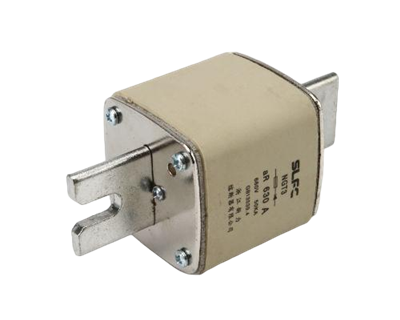
Hey there! As a supplier of EV Fuse Links, I've been getting a lot of questions lately about how contact resistance affects the performance of these crucial components. So, I thought I'd take a deep dive into this topic and share my insights with you all.
First off, let's talk about what contact resistance is. In simple terms, contact resistance is the resistance that occurs at the point where two conductors meet. In the case of an EV Fuse Link, this usually happens at the connection points between the fuse link and the terminals. It's caused by a variety of factors, including the material properties of the conductors, the surface finish, and the amount of pressure applied at the contact points.


Now, you might be wondering why contact resistance matters. Well, it turns out that it can have a significant impact on the performance of an EV Fuse Link. One of the main effects of high contact resistance is increased heat generation. When current flows through a conductor, it encounters resistance, and this resistance causes the conductor to heat up. The higher the resistance, the more heat is generated. In the case of an EV Fuse Link, excessive heat can lead to a number of problems.
For starters, it can cause the fuse link to degrade over time. The heat can cause the material of the fuse link to expand and contract, which can lead to mechanical stress and eventually cause the fuse link to break. This is obviously a big problem, as a broken fuse link can lead to a loss of power in the electrical system of an electric vehicle, which can be dangerous.
In addition to causing mechanical damage, excessive heat can also affect the electrical performance of the fuse link. The heat can cause the resistance of the fuse link to change, which can lead to inaccurate current sensing. This can be a problem, as the fuse link is designed to protect the electrical system by blowing when the current exceeds a certain level. If the resistance of the fuse link changes due to heat, it may not blow at the correct current level, which can lead to overheating and potentially cause a fire.
Another issue with high contact resistance is that it can cause voltage drops. When current flows through a conductor with resistance, there is a voltage drop across the conductor. The higher the resistance, the greater the voltage drop. In an EV electrical system, voltage drops can cause a number of problems. For example, they can reduce the efficiency of the electrical system, as more energy is wasted as heat. They can also cause problems with the operation of sensitive electronic components, as these components may require a specific voltage level to function properly.
So, how can we reduce contact resistance in an EV Fuse Link? Well, there are a few things that we can do. First, we can choose the right materials for the conductors. Materials with low resistivity, such as copper and silver, are often used in EV Fuse Links because they have low resistance. We can also ensure that the surface finish of the conductors is smooth and clean, as rough or dirty surfaces can increase contact resistance.
Another important factor is the amount of pressure applied at the contact points. If the pressure is too low, there may not be good electrical contact between the conductors, which can increase the resistance. On the other hand, if the pressure is too high, it can cause mechanical damage to the conductors. So, it's important to find the right balance.
At our company, we take contact resistance very seriously. We use high-quality materials and advanced manufacturing processes to ensure that our EV Fuse Links have low contact resistance. We also conduct rigorous testing to make sure that our products meet the highest standards of quality and performance.
Now, let's take a look at some of the specific products that we offer. We have a wide range of Automotive Fuse that are designed for use in electric vehicles. These fuses are available in different ratings and configurations to meet the specific needs of our customers.
One of our popular products is the 150V/250V EV Car Fuse. This fuse is designed to provide reliable protection for the electrical system of electric vehicles operating at 150V or 250V. It has a low contact resistance, which helps to reduce heat generation and improve the overall performance of the electrical system.
We also offer Fuse Electric Vehicle that are specifically designed for use in high-voltage applications. These fuses are capable of handling high currents and are designed to provide fast and reliable protection in the event of an overcurrent condition.
If you're in the market for EV Fuse Links, I encourage you to consider our products. We have a team of experts who are dedicated to providing the best possible products and services to our customers. Whether you're a manufacturer of electric vehicles or a distributor of automotive parts, we can work with you to find the right EV Fuse Links for your needs.
If you have any questions or would like to discuss your specific requirements, please don't hesitate to contact us. We're always happy to help and look forward to the opportunity to work with you.
References
- "Electrical Contact Resistance: Principles, Practice, and Applications" by Ronald Holm
- "Handbook of Fuses" by Fuse Engineers Inc.