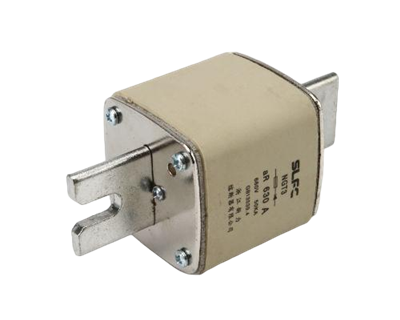
In the realm of electrical protection, safeguarding equipment from voltage surges is of paramount importance. As an NT Fuse supplier, I am frequently asked whether NT fuses can effectively protect against voltage surges. In this blog, I'll delve into the characteristics of NT fuses, their mechanisms, and evaluate their efficacy in handling voltage surges.
Understanding NT Fuses
NT fuses, also known as high rupturing capacity (HRC) fuses, are widely used in industrial and electrical applications. They are designed to interrupt the circuit when a fault current occurs, protecting electrical equipment from damage caused by over - currents. NT fuses are characterized by their high breaking capacity, which means they can safely interrupt high - magnitude short - circuit currents.
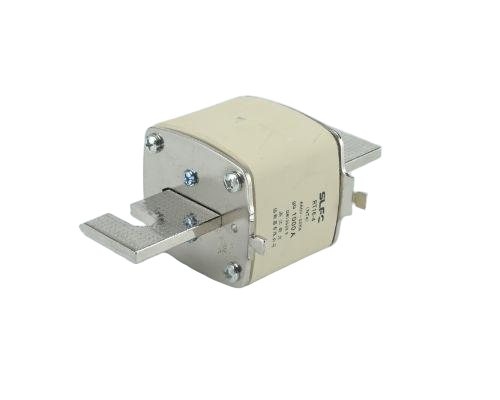
The construction of NT fuses typically involves a fuse element, usually made of silver or copper, enclosed in a ceramic body. The fuse element is carefully designed to melt at a specific current level. Once the current exceeds this level, the fuse element melts, creating an open circuit and stopping the flow of electricity.
How Voltage Surges Occur
Voltage surges are sudden increases in electrical voltage that can last from a few milliseconds to several seconds. There are several causes of voltage surges:

- Lightning Strikes: When lightning hits a power line or a nearby structure, it can induce a large voltage surge in the electrical system. These surges can be extremely high, reaching thousands of volts.
- Switching Operations: In an electrical system, the switching on or off of large loads, such as motors or transformers, can cause voltage surges. When a large load is suddenly disconnected, the stored energy in the magnetic field can be released, causing a voltage spike.
- Power Grid Issues: Problems in the power grid, such as faults or voltage fluctuations, can also lead to voltage surges in the electrical system.
Can NT Fuses Protect Against Voltage Surges?
To answer the question of whether NT fuses can protect against voltage surges, we need to understand their basic operating principle. NT fuses are primarily designed to protect against over - currents, not necessarily voltage surges.
The main purpose of an NT fuse is to detect and interrupt excessive current flow. When a short - circuit occurs, the current can rise rapidly to a very high level. The fuse element in an NT fuse will heat up due to the high current and melt, breaking the circuit. However, voltage surges may not always result in a significant increase in current.
For example, a high - voltage surge with a short duration may not provide enough time for the fuse element to heat up and melt. In some cases, the voltage surge may be so fast that the fuse reacts too slowly to protect the equipment.
On the other hand, if the voltage surge causes a sustained increase in current, the NT fuse will operate as intended. For instance, if a voltage surge causes a short - circuit in a device, the resulting high current will cause the NT fuse to blow.
Limitations of NT Fuses in Protecting Against Voltage Surges
- Response Time: As mentioned earlier, NT fuses have a certain response time. They rely on the heating effect of the current to melt the fuse element. In the case of very fast - rising voltage surges, the fuse may not be able to react quickly enough to protect the equipment.
- Voltage Rating: NT fuses are rated for a specific voltage. If the voltage surge exceeds the rated voltage of the fuse, it may not function properly. In some cases, the high - voltage may cause arcing or other issues within the fuse, reducing its effectiveness.
- Energy Limitation: NT fuses are mainly designed to handle the energy associated with over - currents. Voltage surges can carry a large amount of energy in a short period, which the fuse may not be able to dissipate effectively.
Complementary Protection Measures
While NT fuses have limitations in protecting against voltage surges, they can be used in conjunction with other protective devices to enhance the overall protection of electrical systems.
- Surge Protective Devices (SPDs): SPDs are specifically designed to protect against voltage surges. They work by diverting the excess voltage to the ground when a surge occurs. By installing an SPD in parallel with the NT fuse, the SPD can quickly respond to voltage surges and limit the voltage across the protected equipment.
- Varistors: Varistors are another type of device that can be used to protect against voltage surges. They have a non - linear resistance characteristic, which means that their resistance decreases significantly when the voltage across them exceeds a certain threshold. This allows them to conduct the excess current and protect the equipment.
Specific NT Fuses and Their Applications
As an NT Fuse supplier, I offer a wide range of NT fuses, including NH1 Fuse, NH00C Fuse, and NH4 Fuse.
- NH1 Fuse: This type of fuse is commonly used in medium - voltage electrical systems. It has a relatively high breaking capacity and can handle moderate over - currents. While it may not be the best solution for direct voltage surge protection, it can work in combination with other devices to protect the overall system.
- NH00C Fuse: NH00C fuses are suitable for low - voltage applications. They are more compact and can be used in space - constrained environments. Similar to other NT fuses, they are mainly for over - current protection but can contribute to the overall protection scheme when used with surge - protection devices.
- NH4 Fuse: NH4 fuses are designed for high - power applications. They have a very high breaking capacity and can withstand large over - currents. In high - power electrical systems, combining NH4 fuses with appropriate surge - protection measures is crucial for reliable operation.
The Importance of Proper Selection and Installation
To ensure the effectiveness of the protection system, proper selection and installation of NT fuses and other protective devices are essential.
- Selection: When selecting an NT fuse, factors such as the rated current, voltage, and breaking capacity need to be considered. The rated current of the fuse should be appropriate for the normal operating current of the circuit, while the breaking capacity should be sufficient to handle potential short - circuit currents. For voltage surge protection, the compatibility with other protective devices also needs to be taken into account.
- Installation: Correct installation of the NT fuse is crucial. The fuse should be properly connected in the circuit, and the contacts should be clean and tight. Any loose connections can cause overheating and affect the performance of the fuse. When installing surge - protection devices, they should be installed as close as possible to the equipment to be protected to minimize the length of the connection and reduce the impedance.
Contact for Procurement and Consultation
As an experienced NT Fuse supplier, I understand the importance of reliable electrical protection. Whether you are looking for information on how to protect your electrical system from voltage surges or need to purchase high - quality NT fuses, I am here to assist you. If you have any questions or are interested in discussing your specific requirements, please feel free to reach out. Together, we can design the most suitable electrical protection solution for your needs.
References
- Blume, E. (1972). High - Rupturing - Capacity Fuses for Circuit Protection in Industry. IEEE Transactions on Industry and General Applications, 8(6), 489 - 495.
- Blackburn, J. L. (1993). Protective Relaying: Principles and Applications. Marcel Dekker.
- Gross, C. A. (2001). Electric Power System Protection and Automation. IEEE Press.