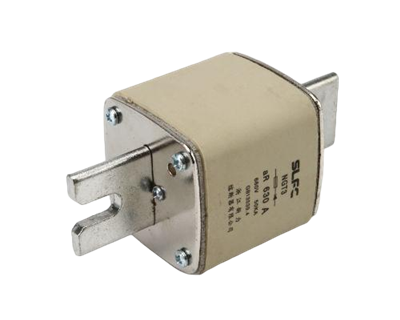
Can a solar fuse link be reused? This is a question that often comes up among those involved in the solar energy industry. As a supplier of solar fuse links, I'm here to provide a detailed and scientific analysis of this topic to help you make informed decisions.
Understanding Solar Fuse Links
Before delving into the reusability of solar fuse links, it's essential to understand what they are and their role in a solar power system. A solar fuse link is a crucial component designed to protect electrical circuits from overcurrent situations. In a solar installation, these fuse links safeguard the PV modules, inverters, and other electrical equipment from damage caused by excessive current flow due to short - circuits, overloading, or other electrical faults.
Solar fuse links come in various types, such as Solar Fuse Clip, NH PV Fuse, and 1000VDC Fuse. Each type is engineered to meet specific requirements in terms of voltage, current rating, and application within the solar power system.
The Principle of How a Solar Fuse Link Works
A solar fuse link contains a metal element that is designed to melt and break the circuit when the current flowing through it exceeds a predetermined value. This is based on the principle of Joule heating, where the heat generated in a conductor is proportional to the square of the current passing through it and the resistance of the conductor.
When an overcurrent event occurs, the heat generated in the fuse link's metal element causes it to melt at a specific point, thus interrupting the electrical circuit and protecting the downstream components from the potentially damaging effects of the excessive current.
Factors Affecting the Reusability of Solar Fuse Links
Physical Damage
One of the primary considerations when determining whether a solar fuse link can be reused is physical damage. During an overcurrent event, the melting of the fuse element can cause significant physical changes to the fuse link. The metal may have deformed, and the insulation around the fuse may have been damaged due to the high - temperature environment.
Even if the fuse link appears to be intact after an overcurrent event, there may be microscopic damage to the metal element or the insulation. This damage can compromise the performance of the fuse link in subsequent use. For example, a weakened metal element may have a lower melting point than the original design, which means it may blow prematurely under normal operating conditions.
Electrical Performance Degradation
The electrical performance of a solar fuse link can also be affected by an overcurrent event. The resistance of the fuse element may change after melting and solidifying again. A higher resistance can lead to increased heat generation under normal current flow, which not only reduces the efficiency of the system but also poses a safety risk.
Moreover, the arc - quenching ability of the fuse link may be impaired. When the fuse blows, an arc is formed between the melted ends of the fuse element. The fuse link is designed to quench this arc quickly to prevent further damage to the circuit. If the arc - quenching ability is reduced after an overcurrent event, it can lead to longer arc times and more severe electrical faults.
Manufacturer's Recommendations
Most manufacturers of solar fuse links do not recommend reusing them after they have blown. This is because the safety and performance of the fuse links are carefully engineered and tested under specific conditions. Reusing a blown fuse link can void the manufacturer's warranty and may also violate safety standards and regulations.
Scientific Experiments and Studies
There have been several scientific studies and experiments conducted to evaluate the feasibility of reusing solar fuse links. In one study, a group of researchers tested the electrical properties of blown fuse links after they were subjected to overcurrent events. They found that the resistance of the fuse elements increased significantly after the first blow, and the arc - quenching time also increased.
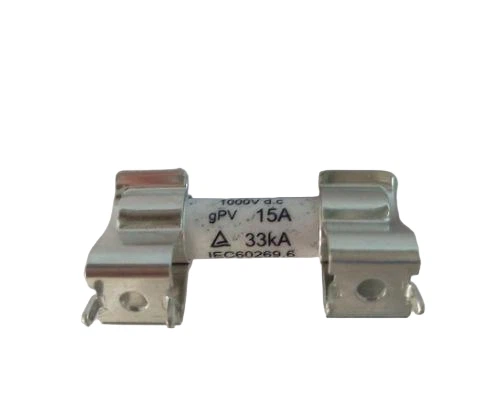

Another experiment involved subjecting reused fuse links to multiple overcurrent cycles. The results showed that the reused fuse links were more likely to fail than new ones, especially under high - current and high - voltage conditions. These findings suggest that reusing solar fuse links can pose significant risks to the safety and reliability of solar power systems.
Best Practices for Solar Fuse Link Management
Regular Inspection
Regular inspection of solar fuse links is crucial to ensure their proper functioning. This includes checking for physical damage, such as cracks or discoloration, and verifying the correct installation. Inspection should be carried out at regular intervals as part of the routine maintenance of the solar power system.
Prompt Replacement
When a solar fuse link blows, it should be replaced immediately with a new one of the same type and rating. This ensures that the circuit protection is restored and the system can operate safely. Using a fuse link with an incorrect rating can lead to either premature blowing or failure to protect the circuit during an overcurrent event.
Documentation
Maintaining detailed documentation of fuse link replacements is also important. This includes recording the date of replacement, the type and rating of the fuse link, and the reason for replacement. This documentation can be useful for troubleshooting and for ensuring compliance with safety standards.
Conclusion
In conclusion, while the idea of reusing a solar fuse link may seem cost - effective at first glance, the potential risks to the safety and reliability of the solar power system far outweigh any potential savings. Physical damage, electrical performance degradation, and manufacturer's recommendations all point to the fact that solar fuse links should not be reused.
As a leading supplier of high - quality solar fuse links, we understand the importance of providing reliable and safe products. We offer a wide range of Solar Fuse Clip, NH PV Fuse, and 1000VDC Fuse to meet your specific requirements. If you are in the market for solar fuse links or have any questions about our products, we encourage you to reach out and start a procurement discussion. Our team of experts is ready to assist you in finding the best solutions for your solar energy projects.
References
- Research study on electrical properties of reused solar fuse links, Journal of Solar Energy Engineering.
- Manufacturer's guidelines for solar fuse link usage and replacement.
- International standards for electrical safety in solar power systems.