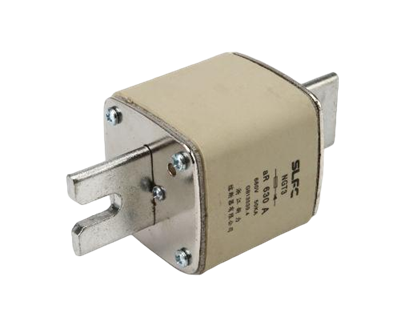
Hey there! As a supplier of EV Fuse Bases, I've been diving deep into what it takes for these components to work well in fast - charging systems. In this blog, I'll share the key requirements that an EV Fuse Base must meet in such high - powered setups.
1. High - Current Handling Capacity
Fast - charging systems are all about getting a large amount of electrical current into the vehicle's battery in a short time. This means that an EV Fuse Base has to be able to handle high currents without overheating or failing.
The current flow during fast - charging can be several hundred amperes. For example, some of the latest fast - charging stations can push out currents of 350A or even more. An EV Fuse Base needs to have low resistance to minimize power losses and heat generation. If the resistance is too high, the fuse base will heat up, which can lead to premature failure of the fuse and potentially cause safety hazards.
When we design our Electric Vehicle Fuse Base, we use high - conductivity materials like copper or copper alloys. These materials have excellent electrical conductivity, allowing them to carry high currents efficiently. We also pay close attention to the cross - sectional area of the conductors in the fuse base. A larger cross - sectional area means lower resistance, which is crucial for handling high currents.
2. Voltage Rating Compatibility
Fast - charging systems often operate at high voltages. Common voltage levels for EV fast - charging can range from 400V to 800V or even higher in some next - generation systems. The EV Fuse Base must have a voltage rating that is compatible with the operating voltage of the fast - charging system.
If the voltage rating of the fuse base is too low, it can lead to electrical breakdown, arcing, and short - circuits. This not only damages the fuse base but can also pose a serious safety risk to the vehicle and the charging infrastructure.
We make sure that our EV Fuse Holder is designed with proper insulation and dielectric strength. We use high - quality insulating materials that can withstand the high voltages present in fast - charging systems. This ensures that the fuse base can operate safely and reliably under the specified voltage conditions.
3. Thermal Management
As mentioned earlier, high currents in fast - charging systems generate heat. Effective thermal management is essential for the EV Fuse Base to maintain its performance and reliability.
One way we address thermal management is by designing the fuse base with good heat dissipation features. We use heat - sink materials and add fins or other structures to increase the surface area for heat transfer. This helps to dissipate the heat generated during high - current operation more effectively.
We also conduct extensive thermal testing on our Electric Vehicle Fuse Holder to ensure that it can operate within a safe temperature range. By monitoring the temperature rise during high - current simulations, we can make adjustments to the design if necessary.
4. Mechanical Durability
Fast - charging systems are subject to vibrations, shocks, and mechanical stresses during normal operation. The EV Fuse Base needs to be mechanically durable to withstand these conditions.
We use robust materials and construction techniques to ensure the mechanical integrity of our fuse bases. The housing of the fuse base is made of strong plastics or metals that can resist impact and deformation. The connections between the fuse and the base are designed to be secure and stable, even under vibration.
In addition, we test our fuse bases for mechanical durability using standardized tests. These tests simulate the real - world conditions that the fuse base may encounter during its service life, such as road vibrations in an electric vehicle or the movement of the charging equipment.
5. Short - Circuit Protection
One of the primary functions of a fuse base in any electrical system is to provide short - circuit protection. In fast - charging systems, where high currents are involved, short - circuit protection is even more critical.
The EV Fuse Base should be able to quickly and reliably interrupt the circuit in the event of a short - circuit. This requires the fuse to have a fast - acting characteristic. When a short - circuit occurs, the high - current flow causes the fuse element to melt, breaking the circuit and preventing damage to the charging system and the vehicle's battery.
We select fuses with appropriate current - interrupting ratings for our fuse bases. These ratings are carefully chosen based on the maximum short - circuit current that the fast - charging system may experience. By ensuring that the fuse can handle the short - circuit current safely, we provide an extra layer of protection for the entire system.
6. Compatibility with Fuse Types
There are different types of fuses available for use in EV applications, such as blade fuses, cartridge fuses, and high - voltage fuses. The EV Fuse Base must be compatible with the specific type of fuse used in the fast - charging system.
We offer a variety of EV Fuse Holders that are designed to be compatible with different fuse types. This gives our customers the flexibility to choose the fuse that best suits their application requirements. Whether it's a high - current blade fuse or a specialized high - voltage cartridge fuse, our fuse bases can provide a secure and reliable connection.
7. Safety Standards Compliance
Safety is of utmost importance in EV fast - charging systems. The EV Fuse Base must comply with relevant safety standards and regulations.


We ensure that our products meet international safety standards such as UL (Underwriters Laboratories) standards and IEC (International Electrotechnical Commission) standards. These standards cover aspects such as electrical safety, mechanical safety, and fire resistance. By complying with these standards, we guarantee that our Electric Vehicle Fuse Base is safe for use in fast - charging systems.
Contact Us for Your EV Fuse Base Needs
If you're in the market for high - quality EV Fuse Bases for your fast - charging systems, look no further. We've got the expertise and the products to meet your requirements. Our team of experts is always ready to assist you in selecting the right fuse base for your specific application. Whether you need a standard product or a customized solution, we can work with you to find the best fit. So, don't hesitate to reach out to us and start a discussion about your procurement needs.
References
- "Electric Vehicle Charging Infrastructure: Technology and Standards" by various industry experts
- UL Standards for Electrical Equipment in EV Applications
- IEC Publications on Electric Vehicle Fuses and Fuse Bases