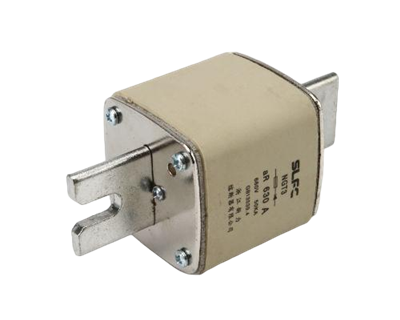
Contact resistance is a crucial parameter in the performance of PV fuse bases. As a PV fuse base supplier, understanding the concept, factors influencing it, and its implications is essential for providing high - quality products to the solar energy industry.
What is Contact Resistance?
Contact resistance refers to the resistance that occurs at the interface between two conductive materials in contact. In the context of a PV fuse base, it is the resistance at the points where the fuse link makes contact with the fuse base terminals. When current flows through the circuit, the contact resistance causes a voltage drop across the contact interface according to Ohm's law (V = IR). This voltage drop results in power dissipation (P = VI) in the form of heat.
Why Contact Resistance Matters in PV Fuse Bases
In a photovoltaic (PV) system, the PV fuse base is responsible for safely interrupting the circuit in case of over - current conditions. A high contact resistance can lead to several problems. Firstly, excessive heat generation can cause thermal stress on the fuse base and the surrounding components. This may degrade the insulation materials, reduce the mechanical strength of the fuse base, and even pose a fire hazard.
Secondly, the power loss due to contact resistance can reduce the overall efficiency of the PV system. In large - scale solar power plants, even a small increase in contact resistance across multiple fuse bases can result in significant power losses over time.


Factors Affecting Contact Resistance in PV Fuse Bases
Material Properties
The materials used for the fuse base terminals and the fuse link play a significant role in determining the contact resistance. High - conductivity materials such as copper and silver are commonly used for their low resistivity. Copper has a relatively high conductivity and is cost - effective, making it a popular choice. Silver, on the other hand, has even higher conductivity but is more expensive. The surface finish of these materials also matters. A smooth and clean surface reduces the contact resistance compared to a rough or oxidized surface.
Contact Pressure
The pressure between the fuse link and the fuse base terminals affects the contact area and, consequently, the contact resistance. Higher contact pressure increases the effective contact area, reducing the contact resistance. However, excessive pressure can damage the fuse link or the fuse base. Our PV fuse bases are designed to provide optimal contact pressure to ensure low contact resistance while maintaining the integrity of the components.
Surface Contamination
Contamination on the contact surfaces, such as dust, dirt, or oxidation, can significantly increase the contact resistance. Oxidation of copper terminals, for example, forms a layer of copper oxide, which has a much higher resistivity than copper itself. To mitigate this issue, we use special surface treatments on our 1500 Vdc 10x85mm Solar PV Fuse Holder to prevent oxidation and protect the contact surfaces from environmental contaminants.
Temperature
Temperature can also affect contact resistance. As the temperature rises, the resistivity of the conductive materials generally increases. Additionally, thermal expansion and contraction can change the contact pressure and the contact area between the fuse link and the fuse base terminals. Our PV fuse bases are designed to withstand a wide range of temperatures to maintain stable contact resistance under different operating conditions.
Measuring Contact Resistance in PV Fuse Bases
Measuring contact resistance accurately is essential for quality control and performance evaluation. One common method is the four - wire (Kelvin) measurement technique. In this method, two current - carrying wires are used to pass a known current through the contact interface, and two voltage - sensing wires are used to measure the voltage drop across the contact. The contact resistance is then calculated using Ohm's law (R = V/I).
Our Solutions for Low Contact Resistance
As a PV fuse base supplier, we are committed to providing products with low contact resistance. We use high - quality copper alloys with excellent conductivity for our fuse base terminals. Our manufacturing processes ensure precise dimensions and smooth surface finishes to maximize the contact area between the fuse link and the terminals.
We also offer Solar PV String Fuse and 10mmx85mm 1500V 50KA Solar PV Fuse Link that are specifically designed to work in harmony with our fuse bases. These components are engineered to provide reliable electrical connections with low contact resistance, ensuring the safe and efficient operation of PV systems.
Importance of Low Contact Resistance in PV System Safety
Low contact resistance is not only important for system efficiency but also for safety. In a PV system, a high - resistance connection can lead to overheating, which may cause the fuse to blow prematurely or, in the worst - case scenario, start a fire. By providing PV fuse bases with low contact resistance, we help our customers reduce the risk of electrical failures and ensure the long - term safety of their PV installations.
Case Studies: Impact of Contact Resistance in Real - World PV Systems
In a large - scale solar power plant, a small increase in contact resistance across multiple fuse bases can have a significant impact on the overall system performance. For example, a study found that in a 1 MW PV system, an average increase of 10 mΩ in contact resistance across all fuse bases resulted in a power loss of approximately 1 - 2% over a year. This not only reduces the energy output of the system but also increases the operating costs.
In another case, a PV installation experienced a fire due to overheating caused by high contact resistance in the fuse bases. After replacing the faulty fuse bases with our products, which have low contact resistance, the system operated safely and efficiently.
Conclusion
Contact resistance is a critical factor in the performance and safety of PV fuse bases. As a PV fuse base supplier, we understand the importance of providing products with low contact resistance. Our use of high - quality materials, advanced manufacturing processes, and rigorous quality control measures ensure that our PV fuse bases, 1500 Vdc 10x85mm Solar PV Fuse Holder, Solar PV String Fuse, and 10mmx85mm 1500V 50KA Solar PV Fuse Link offer reliable electrical connections with minimal power loss and heat generation.
If you are looking for high - quality PV fuse bases and related components, we invite you to contact us for procurement and further discussions. Our team of experts is ready to assist you in finding the best solutions for your PV system needs.
References
- Grover, F. W. (1962). Inductance Calculations: Working Formulas and Tables. Dover Publications.
- Marki, M., & Williams, R. (2001). RF and Microwave Applications and Technologies, Volume 13. Artech House.
- Solar Energy Industries Association. (2023). PV System Safety Guidelines.