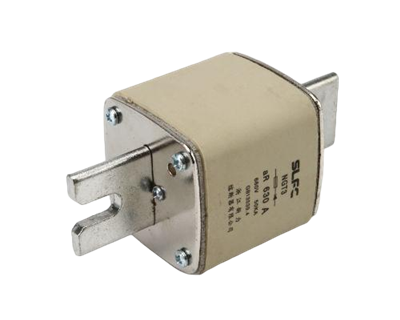
Hey there! As a supplier of RT14 Fuses, I often get asked about the contact resistance of these fuses. It's a crucial aspect that can affect the performance and safety of electrical systems. So, let's dive right in and explore what the contact resistance of RT14 Fuse is all about.
What is Contact Resistance?
Before we specifically talk about the RT14 Fuse, let's understand what contact resistance means. Contact resistance is the resistance that occurs at the interface between two conductors when they are in contact with each other. In the case of fuses, it's the resistance at the points where the fuse connects to the fuse holder or base.
When current flows through these contact points, the contact resistance causes a voltage drop. This voltage drop can lead to power loss in the form of heat. If the contact resistance is too high, it can cause excessive heating, which might damage the fuse, the fuse holder, or even the entire electrical circuit. So, keeping the contact resistance within an acceptable range is super important.
Contact Resistance in RT14 Fuses
RT14 Fuses are widely used in various electrical applications due to their reliability and performance. The contact resistance in RT14 Fuses is designed to be as low as possible. This is achieved through careful design and the use of high - quality materials.
The manufacturers of RT14 Fuses pay close attention to the contact surfaces. They make sure that the surfaces are smooth and clean to minimize the resistance. The materials used for the contacts are usually good conductors of electricity, such as copper or silver - plated copper. These materials help to reduce the contact resistance and ensure efficient current flow.
Factors Affecting Contact Resistance in RT14 Fuses
There are several factors that can affect the contact resistance of RT14 Fuses.
1. Surface Condition
The surface condition of the contacts is a major factor. If the contact surfaces are dirty, corroded, or have oxidation, the contact resistance will increase. For example, in a humid environment, the copper contacts of the RT14 Fuse may start to oxidize over time. This oxide layer acts as an insulator and increases the resistance at the contact points.
2. Contact Force
The force with which the fuse is held in the fuse holder or base also matters. If the contact force is too low, the contact area between the fuse and the holder/base will be small, resulting in higher contact resistance. On the other hand, if the contact force is too high, it might damage the contacts. So, the design of the RT14 - 32 Fuse Holder, RT14 - 20 Base, and RT14 - 63 Fuse Base is crucial to ensure the right contact force.
3. Current Load
The amount of current flowing through the fuse can also affect the contact resistance. When a high - current load passes through the fuse, the heat generated at the contact points can cause the materials to expand. This expansion can change the contact area and, in some cases, increase the contact resistance.
Measuring Contact Resistance of RT14 Fuses
Measuring the contact resistance of RT14 Fuses is an important part of quality control. There are several methods to measure it.
One common method is the four - wire method. In this method, two wires are used to carry the current through the contact, and another two wires are used to measure the voltage drop across the contact. By using Ohm's law (R = V/I), the contact resistance can be calculated.
Manufacturers usually test the contact resistance during the production process to ensure that it meets the specified standards. As a supplier, I also make sure to check the contact resistance of the RT14 Fuses I supply to my customers. This helps to guarantee the quality and performance of the fuses.
Importance of Low Contact Resistance in RT14 Fuses
Having a low contact resistance in RT14 Fuses is extremely important for several reasons.
1. Energy Efficiency
Low contact resistance means less power loss in the form of heat. This leads to higher energy efficiency in the electrical system. In large - scale electrical installations, even a small reduction in power loss can result in significant cost savings over time.


2. Safety
Excessive contact resistance can cause overheating, which is a major safety hazard. It can lead to the melting of the fuse, damage to the fuse holder, and even start a fire in extreme cases. By keeping the contact resistance low, the risk of these safety issues is greatly reduced.
3. Reliability
A fuse with low contact resistance is more reliable. It can operate more consistently over its lifespan, providing better protection for the electrical circuit. This is especially important in critical applications where a failure of the fuse can cause serious problems.
How We Ensure Low Contact Resistance in Our RT14 Fuses
As a supplier of RT14 Fuses, I take several steps to ensure that the fuses I provide have low contact resistance.
First of all, I source the fuses from reputable manufacturers who have strict quality control measures in place. These manufacturers use high - quality materials and advanced manufacturing processes to produce fuses with low contact resistance.
Secondly, I conduct my own inspections and tests on the fuses. I check the surface condition of the contacts and measure the contact resistance using reliable testing equipment. If any fuses do not meet the required standards, they are not sent to the customers.
Conclusion
In conclusion, the contact resistance of RT14 Fuses is a critical factor that affects the performance, safety, and energy efficiency of electrical systems. By understanding the factors that affect contact resistance and taking appropriate measures to keep it low, we can ensure that the RT14 Fuses work effectively and reliably.
If you're in the market for high - quality RT14 Fuses with low contact resistance, I'm here to help. Whether you need RT14 - 32 Fuse Holder, RT14 - 20 Base, or RT14 - 63 Fuse Base, I can provide you with the right products. Feel free to get in touch for more information and to start a purchase negotiation. I'm looking forward to working with you!
References
- Electrical Engineering Handbook: Covers basic concepts of contact resistance and its importance in electrical components.
- Fuse Manufacturing Standards: Documents the standards and requirements for the manufacturing of fuses, including contact resistance specifications.