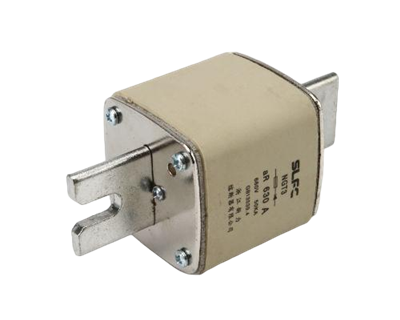
Contact resistance is a crucial parameter when it comes to electrical components, especially in the context of NT Fuse Holders. As a supplier of NT Fuse Holders, understanding and communicating the concept of contact resistance is essential for our customers to make informed decisions about their electrical systems.
Understanding Contact Resistance
Contact resistance refers to the resistance encountered at the interface between two conducting materials when they are in contact. In the case of an NT Fuse Holder, it is the resistance at the points where the fuse makes contact with the holder. This resistance is a result of several factors, including the surface roughness of the contact materials, the presence of oxide layers, and the mechanical pressure applied at the contact points.
When current flows through a circuit, it must pass through the contact points in the NT Fuse Holder. The contact resistance causes a voltage drop across these points, which in turn generates heat. Excessive contact resistance can lead to overheating, which may damage the fuse, the holder, or other components in the circuit. Therefore, minimizing contact resistance is crucial for the reliable and safe operation of electrical systems.


Factors Affecting Contact Resistance
Material Properties
The choice of materials for the NT Fuse Holder and the fuse itself plays a significant role in determining the contact resistance. Materials with high electrical conductivity, such as copper, are commonly used in the construction of fuse holders to minimize resistance. Copper has excellent conductivity and is relatively resistant to oxidation, which helps maintain low contact resistance over time. For example, our Copper Fuse Base is designed to provide a low-resistance path for current flow, ensuring efficient operation of the fuse.
Surface Finish
The surface finish of the contact points also affects contact resistance. A smooth and clean surface reduces the contact area and minimizes the formation of oxide layers, which can increase resistance. During the manufacturing process, we pay close attention to the surface finish of our NT Fuse Holders to ensure optimal contact performance. By using advanced machining and plating techniques, we can achieve a high-quality surface finish that helps maintain low contact resistance.
Mechanical Pressure
The mechanical pressure applied at the contact points is another important factor. Sufficient pressure is required to ensure good electrical contact between the fuse and the holder. If the pressure is too low, the contact area may be reduced, leading to increased resistance. On the other hand, excessive pressure can cause damage to the contact materials. Our NT Fuse Holders are designed with a precise clamping mechanism to apply the appropriate amount of pressure, ensuring reliable contact and low resistance.
Measuring Contact Resistance
Accurately measuring contact resistance is essential for quality control and performance evaluation. There are several methods available for measuring contact resistance, including the four-wire method. In this method, a known current is passed through the contact points, and the voltage drop across the points is measured. The contact resistance can then be calculated using Ohm's law (R = V / I).
We conduct rigorous testing on our NT Fuse Holders to ensure that the contact resistance meets the specified requirements. By using advanced testing equipment and techniques, we can accurately measure the contact resistance and identify any potential issues before the products are released to the market.
Impact of Contact Resistance on Electrical Systems
Efficiency
High contact resistance can reduce the efficiency of an electrical system. The voltage drop across the contact points results in power loss, which is dissipated as heat. This not only wastes energy but also increases the operating temperature of the system, which can affect the performance and lifespan of other components. By minimizing contact resistance, we can improve the overall efficiency of the electrical system and reduce energy consumption.
Safety
Excessive contact resistance can pose a safety hazard. The heat generated by the high resistance can cause the fuse or the holder to overheat, which may lead to a fire or other electrical accidents. Our NT Fuse Holders are designed to have low contact resistance to ensure safe operation in various applications. By using high-quality materials and precise manufacturing processes, we can minimize the risk of overheating and ensure the safety of the electrical system.
Our NT Fuse Holder Products
We offer a wide range of NT Fuse Holders to meet the diverse needs of our customers. Our RT Fuse Holder is a popular choice for many applications. It is designed with a compact and robust structure, providing reliable protection for electrical circuits. The RT Fuse Holder features a low-contact-resistance design, ensuring efficient operation and long service life.
Another product in our portfolio is the NT00 3P Fuse Holder. This holder is specifically designed for three-phase applications and offers excellent performance and reliability. With its advanced contact design and high-quality materials, the NT00 3P Fuse Holder provides low contact resistance and ensures stable operation in demanding environments.
Conclusion
Contact resistance is a critical parameter for NT Fuse Holders. Understanding the factors that affect contact resistance and taking appropriate measures to minimize it are essential for ensuring the efficient, reliable, and safe operation of electrical systems. As a leading supplier of NT Fuse Holders, we are committed to providing high-quality products with low contact resistance. Our products are designed and manufactured using the latest technologies and highest standards to meet the needs of our customers.
If you are interested in our NT Fuse Holders or have any questions about contact resistance, please feel free to contact us for further information and to discuss your specific requirements. We look forward to working with you to provide the best solutions for your electrical applications.
References
- Grover, F. W. (1946). Inductance Calculations: Working Formulas and Tables. Dover Publications.
- Dorf, R. C., & Svoboda, J. A. (2018). Introduction to Electric Circuits. Wiley.