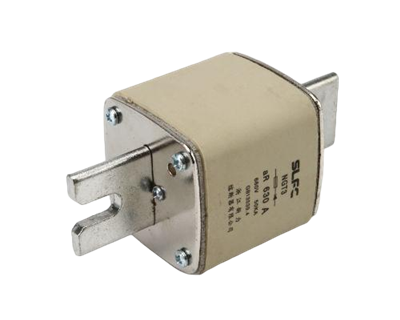
In the field of electrical protection, fuses play a crucial role in safeguarding electrical circuits from over - current conditions. Among the various types of fuses, the RS3 Fuse has gained significant popularity due to its reliable performance and wide range of applications. One of the key parameters associated with the RS3 Fuse is the flashover voltage, which is essential for understanding its behavior and ensuring proper installation and operation. As a leading RS3 Fuse supplier, we are here to delve deep into the concept of the flashover voltage of RS3 Fuses.
Understanding the Basics of Flashover Voltage
Flashover voltage is defined as the minimum voltage at which an electrical discharge occurs across the surface of an insulator or between two conductors separated by a gas or air gap. In the context of fuses, the flashover voltage is the voltage at which an arc forms across the fuse element or between the terminals of the fuse, bypassing the normal current - interrupting function of the fuse. This can lead to dangerous situations, such as short - circuits and equipment damage, if not properly addressed.
The flashover voltage of a fuse is influenced by several factors, including the physical design of the fuse, the materials used in its construction, and the environmental conditions in which it operates. For RS3 Fuses, these factors are carefully considered during the manufacturing process to ensure optimal performance and safety.
Design and Construction of RS3 Fuses
RS3 Fuses are designed with a specific geometry and materials to achieve a balance between current - interrupting capacity and flashover voltage. The fuse element is typically made of a highly conductive metal, such as silver or copper, which has a low resistance and can carry the rated current without overheating. The fuse element is enclosed in a ceramic or glass tube, which acts as an insulator and provides mechanical protection.
The terminals of the RS3 Fuse are designed to ensure good electrical contact and to minimize the risk of arcing. They are usually made of a high - quality metal, such as brass or copper, and are plated with a corrosion - resistant material, such as tin or nickel. The shape and size of the terminals are also optimized to reduce the electric field strength at the surface, which helps to increase the flashover voltage.
Factors Affecting the Flashover Voltage of RS3 Fuses
Environmental Conditions
The environmental conditions in which an RS3 Fuse operates can have a significant impact on its flashover voltage. Humidity, temperature, and altitude are some of the key factors that can affect the electrical properties of the air or gas surrounding the fuse.
High humidity can reduce the flashover voltage by increasing the conductivity of the air. Moisture can condense on the surface of the fuse, creating a conductive path for the electrical discharge. Temperature also plays a role, as the density of the air changes with temperature. At higher temperatures, the air is less dense, which can lead to a lower flashover voltage.
Altitude is another important factor. As the altitude increases, the air pressure decreases, which reduces the dielectric strength of the air. This means that RS3 Fuses operating at high altitudes may have a lower flashover voltage compared to those operating at sea level.
Contamination
Contamination on the surface of the RS3 Fuse can also reduce the flashover voltage. Dust, dirt, and other pollutants can accumulate on the fuse, creating a conductive layer that can facilitate the formation of an arc. This is particularly important in industrial environments, where the air may contain high levels of contaminants.
Electric Field Distribution
The electric field distribution around the RS3 Fuse is influenced by its design and the presence of nearby conductors or objects. Sharp edges or corners on the fuse can create regions of high electric field strength, which can increase the risk of flashover. Proper design and installation of the fuse can help to minimize the electric field concentration and improve the flashover voltage.
Importance of Flashover Voltage in RS3 Fuse Applications
Understanding the flashover voltage of RS3 Fuses is crucial for ensuring the safety and reliability of electrical systems. In applications where the voltage levels are high, such as in power distribution networks or industrial machinery, a low flashover voltage can lead to frequent arcing and short - circuits. This can cause damage to the equipment, disrupt the operation of the system, and pose a safety hazard to personnel.
By selecting RS3 Fuses with an appropriate flashover voltage rating, engineers can ensure that the fuses will operate safely and effectively under normal and abnormal conditions. This helps to prevent electrical failures and downtime, which can result in significant cost savings for the end - user.
RS3 Fuse Product Range and Flashover Voltage Ratings
As a RS3 Fuse supplier, we offer a wide range of RS3 Fuses with different flashover voltage ratings to meet the diverse needs of our customers. Our RS3 Fast Fuse is designed for applications where fast - acting protection is required. It has a high flashover voltage rating, which makes it suitable for use in high - voltage environments.
Our Bolt Fast Fuse and Bolted Fast Fuse are also popular choices among our customers. These fuses are designed for use in applications where a secure connection is required. They have been engineered to provide reliable performance and a high flashover voltage rating, ensuring the safety and stability of the electrical system.
Testing and Certification of RS3 Fuses
To ensure the quality and performance of our RS3 Fuses, we conduct rigorous testing and certification procedures. Our fuses are tested in accordance with international standards, such as IEC and UL, to verify their flashover voltage ratings and other electrical properties.
During the testing process, the fuses are subjected to various electrical and environmental conditions to simulate real - world operating scenarios. This helps us to identify any potential issues and to make necessary improvements to the design and manufacturing process. Our fuses are also certified by independent testing laboratories, which provides our customers with confidence in the quality and reliability of our products.
Contact Us for RS3 Fuse Procurement
If you are in need of high - quality RS3 Fuses with reliable flashover voltage ratings, we are here to help. As a trusted RS3 Fuse supplier, we have the expertise and experience to provide you with the right fuses for your specific application. Whether you are working on a small - scale project or a large - scale industrial installation, we can offer you a customized solution that meets your requirements.
Contact us today to start the procurement process and discuss your needs with our knowledgeable sales team. We look forward to partnering with you to ensure the safety and reliability of your electrical systems.


References
- IEC 60269 - Low - voltage fuses.
- UL 248 - Standard for Fuses for Supplementary Overcurrent Protection.
- Electrical Insulation Handbook, edited by E. Cherney, T. D. Burch, and L. Nehls.