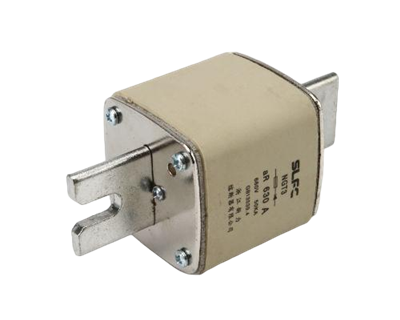
As a supplier of RT18 - 32 Fuses, I have witnessed firsthand the increasing concerns regarding the impact of harmonic currents on these essential electrical components. In this blog, I will delve into the nature of harmonic currents, their influence on RT18 - 32 Fuses, and what this means for users and the electrical systems they are a part of.
Understanding Harmonic Currents
Before we explore their impact on RT18 - 32 Fuses, it's crucial to understand what harmonic currents are. In an ideal electrical system, the voltage and current waveforms are pure sine waves. However, in real - world scenarios, non - linear loads such as variable - speed drives, switching power supplies, and fluorescent lighting introduce distortions in the current waveform. These distortions result in the presence of harmonic currents, which are integer multiples of the fundamental frequency (usually 50Hz or 60Hz in most power systems).
For example, the 3rd harmonic has a frequency of 150Hz (if the fundamental is 50Hz), the 5th harmonic has a frequency of 250Hz, and so on. Harmonic currents can accumulate in the electrical system, leading to a range of problems, from overheating of equipment to interference with communication systems.
The Structure and Function of RT18 - 32 Fuses
RT18 - 32 Fuses are designed to protect electrical circuits from overcurrent conditions. They are a type of fast - acting fuse, typically used in low - voltage applications. The RT18 - 32 Plastic Fuse Holder provides a safe and reliable way to mount the fuse, while the RT18 - 32 Base and RT18 - 32 Fuse Holder Base offer stable connections within the electrical circuit.
When the current flowing through the fuse exceeds its rated value, the fuse element melts, breaking the circuit and preventing damage to the connected equipment. The operation of the fuse is based on the principle of heat generation due to the flow of current through a resistive element. The heat generated is proportional to the square of the current (P = I²R, where P is power, I is current, and R is resistance).


Influence of Harmonic Currents on RT18 - 32 Fuses
Overheating
One of the most significant impacts of harmonic currents on RT18 - 32 Fuses is overheating. Since the heat generated in the fuse element is proportional to the square of the current, the presence of harmonic currents can cause a significant increase in the total root - mean - square (RMS) current. Even if the fundamental current is within the rated value of the fuse, the additional harmonic currents can push the total RMS current above the fuse's rating.
For instance, if a circuit has a fundamental current of 10A and significant 3rd and 5th harmonic currents, the total RMS current might be 12A. If the fuse is rated for 10A, the increased heat generation due to the higher current can cause the fuse element to overheat and potentially melt prematurely. Over time, this can lead to false tripping of the fuse, disrupting the normal operation of the electrical system.
Reduced Lifespan
The continuous exposure to harmonic currents can also reduce the lifespan of RT18 - 32 Fuses. The repeated thermal cycling caused by the fluctuating current levels due to harmonics can cause mechanical stress on the fuse element. This stress can lead to fatigue and cracking of the fuse element, making it more susceptible to failure.
Moreover, the overheating caused by harmonic currents can accelerate the aging process of the fuse materials. The insulation materials in the fuse holder and base can degrade more rapidly, reducing the overall reliability of the fuse and increasing the risk of electrical faults.
Incorrect Sizing
Harmonic currents can also make it challenging to correctly size RT18 - 32 Fuses. Traditional fuse sizing methods are based on the assumption of a pure sine - wave current. However, in the presence of harmonic currents, these methods may not accurately account for the total current flowing through the fuse.
If the fuse is sized based on the fundamental current alone, it may be undersized when considering the total RMS current including harmonics. On the other hand, oversizing the fuse to account for harmonics can compromise the protection provided by the fuse, as it may not trip in a timely manner during a true overcurrent event.
Mitigation Strategies
Harmonic Filters
One way to mitigate the impact of harmonic currents on RT18 - 32 Fuses is to use harmonic filters. These filters are designed to reduce the level of harmonic currents in the electrical system. Passive harmonic filters work by providing a low - impedance path for the harmonic currents, diverting them away from the main circuit. Active harmonic filters, on the other hand, use power electronics to generate counter - harmonic currents that cancel out the existing harmonics.
Correct Fuse Sizing
When dealing with electrical systems with significant harmonic currents, it is essential to use more accurate methods for fuse sizing. This may involve measuring the total RMS current, including harmonics, using appropriate measurement devices. Some sizing guidelines also recommend derating the fuse rating to account for the additional heat generated by harmonic currents.
Monitoring and Maintenance
Regular monitoring of the electrical system can help detect the presence of harmonic currents and their impact on RT18 - 32 Fuses. By using power quality analyzers, it is possible to measure the harmonic content of the current and identify any trends or abnormal levels. Additionally, regular maintenance of the fuses, including visual inspections and testing, can help ensure their proper operation and identify any signs of damage or degradation.
Conclusion
In conclusion, harmonic currents can have a significant impact on RT18 - 32 Fuses, leading to overheating, reduced lifespan, and challenges in sizing. As a supplier of RT18 - 32 Fuses, I understand the importance of addressing these issues to ensure the reliable operation of electrical systems.
By implementing appropriate mitigation strategies such as using harmonic filters, correct fuse sizing, and regular monitoring and maintenance, users can minimize the negative effects of harmonic currents on RT18 - 32 Fuses.
If you are facing issues related to harmonic currents and the performance of RT18 - 32 Fuses in your electrical system, or if you are interested in purchasing high - quality RT18 - 32 Fuses and related products, I encourage you to reach out for a procurement discussion. We can help you choose the right products and provide solutions to ensure the optimal performance of your electrical systems.
References
- Brown, H. E., & Hamilton, A. (2006). Electric Power Distribution Equipment. CRC Press.
- McLyman, C. W. (2004). Transformer and Inductor Design Handbook. Marcel Dekker.
- IEEE Standard 519 - 2014, IEEE Recommended Practices and Requirements for Harmonic Control in Electrical Power Systems.