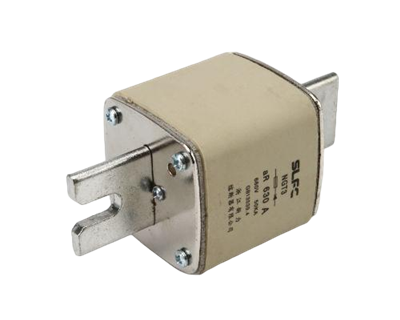
Hey there! As a supplier of NH PV Fuses, I often get asked about the markings on these fuses. So, I thought I'd write this blog to break it all down for you.
First off, let's talk about why these markings are important. The markings on an NH PV Fuse are like a secret code that tells you everything you need to know about the fuse. They give you details about its rating, type, and other crucial specs. This info is super important because it helps you pick the right fuse for your specific application. Using the wrong fuse can lead to all sorts of problems, like equipment damage or even safety hazards.
One of the most common markings you'll see on an NH PV Fuse is the voltage rating. This tells you the maximum voltage that the fuse can handle safely. For example, if you see a marking that says "1000VDC", it means the fuse is designed to work in a direct current (DC) circuit with a maximum voltage of 1000 volts. You can find more about 1000VDC Fuse on our website. Using a fuse with a lower voltage rating than your circuit can cause the fuse to blow prematurely, while using one with a higher rating might not protect your equipment properly.
Another important marking is the current rating. This indicates the maximum amount of current that the fuse can carry without blowing. It's usually marked in amperes (A). For instance, a fuse marked "20A" can handle a current of up to 20 amperes. If the current in the circuit exceeds this rating, the fuse will melt and break the circuit, protecting your equipment from damage. When choosing a fuse based on the current rating, you need to consider the normal operating current of your equipment as well as any possible surges.
The breaking capacity is also a key marking. It shows the maximum fault current that the fuse can interrupt safely without causing any arcing or other dangerous situations. A high breaking capacity is especially important in circuits where there's a risk of short - circuits or high - current faults.
Some NH PV Fuses also have markings that indicate their type. For example, there are fast - acting fuses and slow - acting (or time - delay) fuses. Fast - acting fuses are designed to blow quickly when they detect an overcurrent, which is great for protecting sensitive electronic components. On the other hand, slow - acting fuses can withstand short - term current surges without blowing, making them suitable for motors and other equipment that experience inrush currents when they start up.
The markings on NH PV Fuses can also include information about the manufacturer, the standards the fuse complies with, and the batch number. The manufacturer marking helps you identify the brand and ensures that you're getting a quality product. Standards compliance is important because it means the fuse has been tested and meets certain safety and performance requirements. The batch number can be useful for tracking and quality control purposes.
Now, let's talk about how these markings are applied. The markings are usually printed or engraved on the fuse body. They're made to be clear and durable so that they don't wear off easily, even in harsh environments. This ensures that you can always read the important information about the fuse.
When it comes to installing NH PV Fuses, you need to make sure you use the right accessories. A PV Fuse Holder is an essential part of the installation. It provides a secure and proper connection for the fuse and helps to dissipate heat. A good fuse holder also protects the fuse from physical damage and environmental factors.
Solar Fuse Clip is another important accessory. It's used to hold the fuse in place in the fuse holder and ensures a good electrical contact. Using the right clip is crucial for the proper functioning of the fuse.
As a supplier of NH PV Fuses, we understand the importance of providing high - quality products with clear and accurate markings. We source our fuses from reliable manufacturers and conduct strict quality control checks to make sure they meet all the necessary standards.
If you're in the market for NH PV Fuses or any related accessories, we're here to help. We have a wide range of fuses with different ratings and types to meet your specific needs. Whether you're working on a small solar project or a large - scale industrial application, we can provide you with the right solution.


We offer competitive prices and excellent customer service. Our team of experts is always ready to answer your questions and help you choose the right NH PV Fuse for your project. If you have any questions about the markings on NH PV Fuses or need advice on which fuse to choose, feel free to get in touch with us. We can guide you through the selection process and ensure that you get the best product for your money.
In conclusion, the markings on NH PV Fuses are vital for understanding their capabilities and ensuring their proper use. By paying attention to these markings, you can choose the right fuse for your application, protect your equipment, and ensure the safety of your electrical system. So, next time you're looking at an NH PV Fuse, take a close look at those markings – they hold the key to a successful installation.
If you're interested in purchasing NH PV Fuses or any of our related products, don't hesitate to reach out to us. We're eager to start a conversation and help you with your procurement needs. Let's work together to find the perfect solution for your solar and electrical projects.
References
- Electrical Engineering Handbook: A comprehensive guide to electrical components and their markings.
- Solar PV System Design and Installation Manual: Provides in - depth information about the use of PV fuses in solar systems.