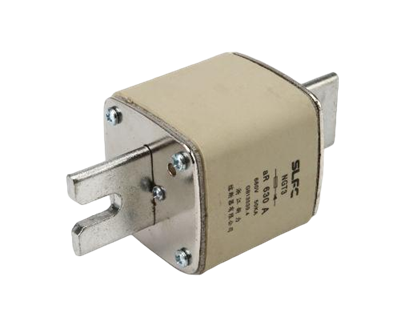
Hey there! As a supplier of NGT Fuses, I often get asked about how to determine the correct fuse size for a circuit. It's a crucial question because using the wrong fuse size can lead to all sorts of problems, from minor electrical glitches to major safety hazards. In this blog post, I'm gonna share some tips and tricks on how to figure out the right NGT fuse size for your circuit.
Understanding the Basics of Fuses
Before we dive into the nitty - gritty of determining the fuse size, let's quickly go over what a fuse is and how it works. A fuse is a safety device that protects an electrical circuit from overcurrent. When the current flowing through the circuit exceeds the rated current of the fuse, the fuse element melts, breaking the circuit and preventing damage to the electrical components.
NGT fuses are a popular type of high - breaking - capacity fuses. They are designed to interrupt high - fault currents safely and quickly. They're used in a wide range of applications, from industrial machinery to electrical panels.
Factors to Consider When Selecting a Fuse Size
1. Load Current
The first and most important factor to consider is the normal operating current of the circuit, also known as the load current. You need to know how much current the circuit typically draws under normal conditions. This information can usually be found in the equipment's manual or on the nameplate.
For example, if you have a motor that has a nameplate rating of 10 amps, this is the load current you'll start with. However, it's important to note that some devices may have a higher inrush current when they start up. Motors, for instance, can draw several times their normal operating current for a short period when they're first turned on.
2. Inrush Current
Inrush current is the temporary surge of current that occurs when a device is first powered on. This can be significantly higher than the normal operating current. When selecting a fuse size, you need to make sure that the fuse can handle the inrush current without blowing.
Most NGT fuses are designed to tolerate a certain amount of inrush current. You can look at the time - current characteristics of the fuse to see how it will respond to different levels of current over time.
3. Fault Current
Another factor to consider is the maximum fault current that the circuit could experience. Fault current occurs when there is a short - circuit or a ground fault in the circuit. The fuse needs to be able to interrupt this high - fault current safely.
NGT fuses come with different breaking capacities. For example, the 100KA Fuse is designed to interrupt fault currents up to 100,000 amps. You need to select a fuse with a breaking capacity that is higher than the maximum fault current that the circuit could experience.
4. Ambient Temperature
The ambient temperature can also affect the performance of the fuse. Fuses are rated at a specific ambient temperature, usually around 25°C. If the ambient temperature is higher or lower than this, the fuse's performance may change.
In higher temperatures, the fuse may blow at a lower current than its rated value. So, if your circuit is located in a hot environment, you may need to select a fuse with a slightly higher rating.
Calculating the Fuse Size
Now that we've covered the factors to consider, let's talk about how to calculate the fuse size.
Step 1: Determine the Load Current
As mentioned earlier, find out the normal operating current of the circuit. Let's say the load current is (I_{load}).


Step 2: Account for Inrush Current
If there is an inrush current, you need to find out how long it lasts and how high it is. A common rule of thumb is to select a fuse with a rating that is 1.25 to 1.5 times the load current for circuits with moderate inrush current. For circuits with high inrush current, like some motors, you may need to go up to 2 to 3 times the load current.
Let's call the multiplier for inrush current (M_{inrush}). So the current considering inrush, (I_{inrush - considered}=M_{inrush}\times I_{load})
Step 3: Check the Breaking Capacity
Make sure the fuse you select has a breaking capacity that is higher than the maximum fault current of the circuit.
Step 4: Consider Ambient Temperature
If the ambient temperature is different from the rated temperature of the fuse, you may need to adjust the fuse size accordingly.
Types of NGT Fuses and Their Applications
Bolted Fuse
The Bolted Fuse is a type of NGT fuse that is commonly used in industrial applications. It is designed to be bolted onto a fuse holder, providing a secure connection. Bolted fuses are often used in high - current circuits where a reliable connection is essential.
RS6 - 00 Fuse
The RS6 - 00 Fuse is another popular NGT fuse. It has specific characteristics that make it suitable for certain types of circuits. It may have a different time - current curve compared to other fuses, which can be beneficial in applications where precise overcurrent protection is required.
Conclusion
Determining the correct fuse size for a circuit using NGT fuses is not as complicated as it may seem. By considering the load current, inrush current, fault current, and ambient temperature, you can select the right fuse for your application.
Remember, using the wrong fuse size can be dangerous, so it's important to take the time to do the calculations correctly. If you're still unsure about which fuse size to choose, don't hesitate to reach out to us. We're here to help you make the right decision.
Whether you're working on an industrial project or a small electrical panel, our NGT fuses are designed to provide reliable overcurrent protection. If you're interested in purchasing NGT fuses for your circuits, we'd love to have a chat with you about your specific requirements. Contact us to start the procurement discussion and find the perfect NGT fuses for your needs.
References
- Electrical Engineering textbooks on circuit protection
- Manufacturer's datasheets for NGT fuses