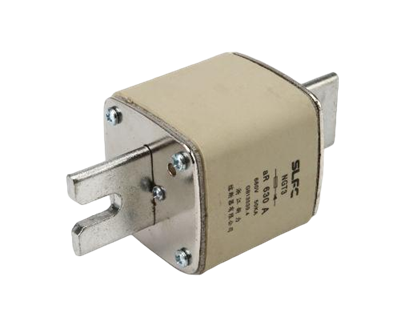
As a trusted Solar Fuse Clip supplier, I often encounter inquiries regarding various technical aspects of our products. One question that frequently comes up is, "What is the dielectric constant of a solar fuse clip?" In this blog post, I will delve into this topic, explaining what the dielectric constant is, its significance in solar fuse clips, and how it impacts the performance of solar power systems.
Understanding the Dielectric Constant
The dielectric constant, also known as relative permittivity, is a fundamental property of a material that describes its ability to store electrical energy in an electric field. It is defined as the ratio of the capacitance of a capacitor filled with the material in question to the capacitance of the same capacitor with a vacuum between its plates. In simpler terms, the dielectric constant indicates how much more energy a material can store compared to a vacuum when subjected to an electric field.
Mathematically, the dielectric constant (εr) is expressed as:
εr = C / C0
Where C is the capacitance of the capacitor with the dielectric material, and C0 is the capacitance of the capacitor with a vacuum.
The dielectric constant is a dimensionless quantity, and its value varies depending on the material. For example, the dielectric constant of air is approximately 1.0006, while that of water is around 80 at room temperature. Materials with high dielectric constants are often used in capacitors to increase their capacitance and energy storage capabilities.
Significance of the Dielectric Constant in Solar Fuse Clips
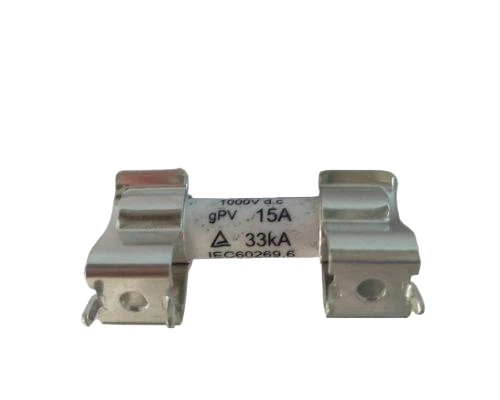
In the context of solar fuse clips, the dielectric constant plays a crucial role in determining the electrical insulation properties of the clip material. Solar fuse clips are designed to hold fuses securely in place and provide a reliable electrical connection between the fuse and the solar power system. At the same time, they must also prevent electrical leakage and short circuits, which can pose serious safety risks and damage to the system.
A high dielectric constant in the clip material helps to improve its insulation properties by reducing the electric field strength within the material. This, in turn, minimizes the likelihood of electrical breakdown and ensures that the fuse clip can withstand high voltages without conducting electricity. Additionally, a high dielectric constant can also help to reduce electromagnetic interference (EMI) and radio frequency interference (RFI) in the solar power system, which can improve the overall performance and reliability of the system.
Factors Affecting the Dielectric Constant of Solar Fuse Clip Materials
The dielectric constant of a solar fuse clip material can be influenced by several factors, including:
- Material Composition: The chemical composition of the material is one of the most significant factors affecting its dielectric constant. Different materials have different molecular structures and polarities, which can result in varying dielectric constant values. For example, polymers such as polyethylene and polypropylene typically have low dielectric constants, while ceramics and some types of plastics have higher dielectric constants.
- Temperature: The dielectric constant of a material can also vary with temperature. In general, the dielectric constant of most materials decreases with increasing temperature. This is because as the temperature rises, the molecular motion within the material increases, which can disrupt the alignment of the electric dipoles and reduce the material's ability to store electrical energy.
- Frequency: The dielectric constant of a material can also be affected by the frequency of the applied electric field. At low frequencies, the dielectric constant is typically higher, while at high frequencies, it may decrease due to the limited ability of the material to respond to the rapidly changing electric field.
Choosing the Right Dielectric Material for Solar Fuse Clips
When selecting a dielectric material for solar fuse clips, it is important to consider several factors, including the dielectric constant, mechanical strength, chemical resistance, and temperature stability. Some of the commonly used materials for solar fuse clips include:
- Plastics: Plastics such as polycarbonate, nylon, and polyester are widely used in solar fuse clips due to their excellent electrical insulation properties, high mechanical strength, and good chemical resistance. These materials also have relatively high dielectric constants, which make them suitable for use in high-voltage applications.
- Ceramics: Ceramics are another popular choice for solar fuse clips due to their high dielectric constants, excellent thermal stability, and good mechanical strength. However, ceramics are also brittle and can be difficult to machine, which may limit their use in some applications.
- Silicone Rubber: Silicone rubber is a flexible and durable material that is often used in solar fuse clips due to its excellent electrical insulation properties, high temperature resistance, and good chemical resistance. Silicone rubber also has a relatively high dielectric constant, which makes it suitable for use in high-voltage applications.
Our Solar Fuse Clips and Their Dielectric Properties
As a leading Solar Fuse Clip supplier, we offer a wide range of high-quality solar fuse clips that are designed to meet the specific needs of our customers. Our solar fuse clips are made from high-performance materials with excellent dielectric properties, ensuring reliable electrical insulation and long-term performance in solar power systems.
We use advanced manufacturing techniques and quality control processes to ensure that our solar fuse clips meet the highest industry standards. Our clips are rigorously tested to ensure that they can withstand high voltages, extreme temperatures, and harsh environmental conditions without compromising their electrical insulation properties.
In addition to our standard solar fuse clips, we also offer custom solutions to meet the unique requirements of our customers. Whether you need a specific size, shape, or material for your solar fuse clip, our team of experts can work with you to develop a customized solution that meets your exact specifications.

Conclusion
In conclusion, the dielectric constant is an important property of solar fuse clip materials that plays a crucial role in determining their electrical insulation properties and performance. A high dielectric constant in the clip material helps to improve its insulation properties, reduce the likelihood of electrical breakdown, and minimize electromagnetic interference in the solar power system.
As a Solar Fuse Clip supplier, we understand the importance of using high-quality materials with excellent dielectric properties in our products. That's why we offer a wide range of solar fuse clips made from high-performance materials that are designed to meet the specific needs of our customers. If you are looking for reliable and high-quality solar fuse clips for your solar power system, please don't hesitate to contact us for more information. We would be happy to discuss your requirements and provide you with a customized solution that meets your exact needs.