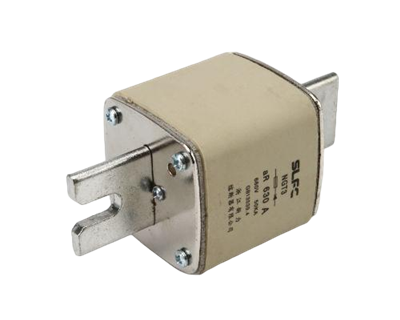
Hey there! As a supplier of RS3 Fuse, I often get asked about the inductance of RS3 Fuse. So, in this blog, I'm gonna break it down for you and explain what it is, why it matters, and how it impacts the performance of the fuse.
First off, let's talk about what inductance is. In simple terms, inductance is a property of an electrical circuit that opposes changes in current. When current flows through a conductor, it creates a magnetic field around it. Inductance is a measure of how much energy is stored in that magnetic field. The unit of inductance is the henry (H), but in practical applications, we usually deal with millihenries (mH) or microhenries (μH).
Now, let's get to the RS3 Fuse. The RS3 Fuse is a type of high - rupturing - capacity (HRC) fuse commonly used in electrical systems to protect against overcurrent conditions. The inductance of an RS3 Fuse is relatively low compared to some other electrical components. This is because the design of the fuse is mainly focused on its ability to interrupt the current quickly when there is an overcurrent event, rather than on storing energy in a magnetic field.
The low inductance of the RS3 Fuse is actually a good thing. In electrical circuits, high inductance can cause issues such as voltage spikes and delays in current changes. For example, in a circuit where you need a fast response to changes in current, a high - inductance component can slow down the process. Since the RS3 Fuse is designed to protect the circuit from overcurrent as quickly as possible, its low inductance ensures that it can respond rapidly to sudden increases in current.
Let's take a look at some of the factors that can affect the inductance of an RS3 Fuse. One of the main factors is the physical design of the fuse. The shape, size, and the way the fuse element is wound or arranged can all have an impact on its inductance. For instance, if the fuse element is wound in a tight coil, it may have a slightly higher inductance compared to a straight - wire design. However, manufacturers of RS3 Fuses usually optimize the design to keep the inductance as low as possible while still maintaining the necessary electrical characteristics.
Another factor is the material used in the fuse. Different materials have different magnetic properties, which can affect the inductance. The materials used in RS3 Fuses are carefully selected to ensure that they have good electrical conductivity and low magnetic permeability, which helps to keep the inductance in check.
Now, I want to mention some of the applications where the low inductance of the RS3 Fuse is particularly beneficial. In power distribution systems, where large amounts of current are flowing, the ability of the fuse to respond quickly to overcurrent is crucial. The low inductance ensures that there are no unnecessary delays in interrupting the current, which can prevent damage to other components in the system.
In electronic circuits, especially those that are sensitive to voltage spikes and current fluctuations, the RS3 Fuse's low inductance is a big advantage. For example, in a circuit that contains microcontrollers or other sensitive electronic components, a high - inductance fuse could cause voltage spikes that might damage these components. The RS3 Fuse helps to protect these circuits by quickly and smoothly interrupting the current when needed.
If you're in the market for an RS3 Fuse, we offer a wide range of options. You can check out our RS3 - 600 Fuse, which is suitable for high - current applications. Our RS3 Fuse Link is another great option that provides reliable overcurrent protection. And if you need a fuse with a specific type of connection, our Bolted Fast Fuse might be the right choice for you.
We understand that choosing the right fuse for your application is important. That's why we're here to help. Whether you have questions about the inductance, the current - rating, or any other aspect of our RS3 Fuses, our team of experts is ready to assist you. We can provide you with detailed technical information and help you select the fuse that best meets your needs.


If you're interested in purchasing our RS3 Fuses, we encourage you to get in touch with us for a procurement discussion. We can offer competitive prices and excellent customer service. Just reach out, and we'll work with you to ensure that you get the best solution for your electrical protection requirements.
In conclusion, the inductance of an RS3 Fuse is an important characteristic that affects its performance in electrical circuits. Its low inductance allows for quick and efficient interruption of overcurrent, making it a reliable choice for a wide range of applications. Whether you're working on a large - scale power distribution system or a small - scale electronic circuit, the RS3 Fuse can provide the protection you need.
References:
- Electrical Engineering textbooks on circuit theory and protection devices.
- Manufacturer's datasheets for RS3 Fuses.